How to organise medical travel: your 2026 guide
TL;DR:
- Planning medical travel requires verified clinics, proper documentation, and organized post-treatment care before departing. Patients should carry comprehensive medical records, choose accredited clinics, and arrange follow-up care with their local doctor in advance. Proper planning ensures safe treatment and efficient recovery, preventing costly complications.
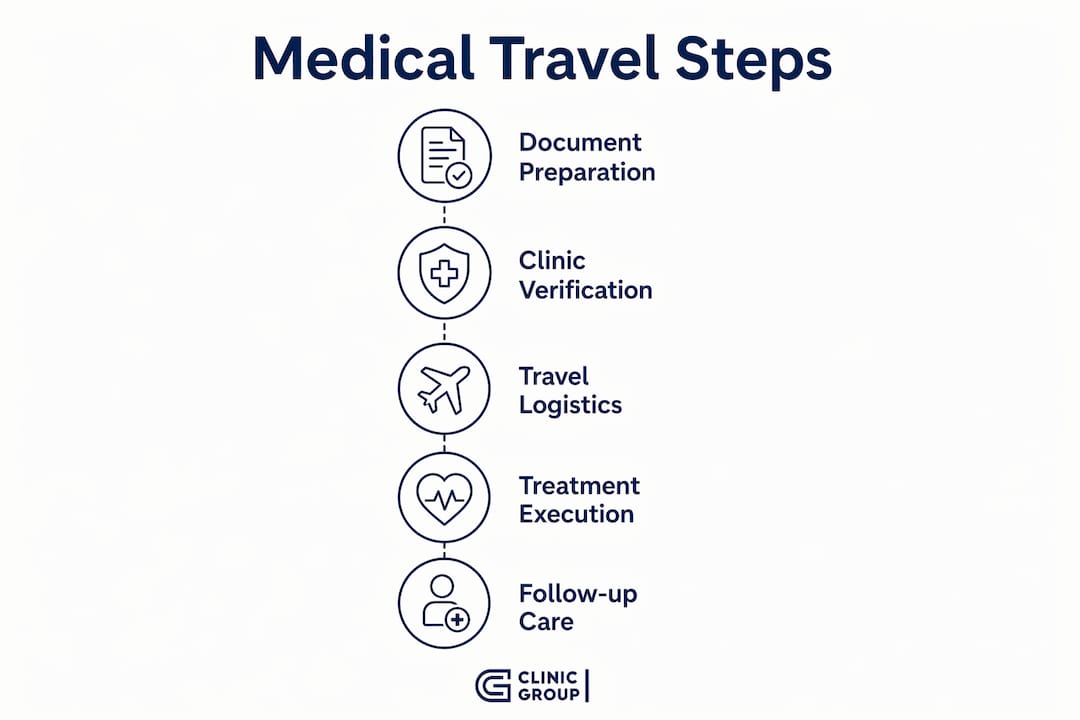
Medical travel organisation is the process of coordinating treatment abroad by selecting accredited clinics, securing specialised insurance, preparing medical documents, and arranging travel logistics before you leave home. Known formally as medical tourism planning, it covers every step from initial clinic research through to post-procedure follow-up care. Patients who plan each stage carefully arrive better prepared, face fewer surprises, and recover with greater confidence. This guide walks you through how to organise medical travel in a structured, practical way, drawing on verified standards and the experience of the Clinicgroup network.
How to organise medical travel: what documents do you need?
Thorough documentation is the foundation of safe medical travel. Without the right records, clinics abroad cannot assess your suitability for treatment, and delays or misunderstandings become far more likely upon arrival.
Collect the following before you contact any clinic:
- Medical reports and diagnosis letters from your GP or specialist
- Recent test results, including blood panels, imaging, and scans
- Current prescriptions and a full list of medications with dosages
- Allergy information, clearly written and signed by a healthcare professional
- Vaccination records if relevant to your destination
- Appointment confirmations and any prior correspondence with the clinic
Once gathered, store everything in two formats. Dual-format document preparation is the recommended standard: carry both digital and paper copies of key documents, including your passport, medication list, and emergency contacts. Digital copies stored in cloud services such as Google Drive, iCloud, or Dropbox keep your records accessible from mobile devices at every stage of the trip.
If your destination country uses a different language, arrange certified translations of your core medical records. Many clinics have international patient coordinators who can advise on which documents require translation. Send your records to the clinic in advance via secure, encrypted channels. Sending records in advance enables the treating team to plan effectively and avoids delays on the day of your procedure.
Pro Tip: Label every document clearly with your full name, date of birth, and the date the record was created. A well-labelled file takes seconds to check and can prevent critical errors in a busy clinical setting.
How do you choose a verified healthcare provider abroad?
Choosing the right clinic is the single most consequential decision in planning medical travel. Accreditation such as JCI or ISO confirms that a clinic adheres to international safety and quality management standards. Accreditation does not guarantee specific outcomes, but it does confirm that the clinic operates within a recognised framework of patient safety. Understanding what these credentials mean is covered in detail in this patient guide to medical tourism accreditation.
When evaluating a clinic, check for the following:
- JCI or ISO accreditation as a baseline quality indicator
- Board-certified specialists with verifiable qualifications in the relevant field
- Transparent, written cost estimates that specify what is included and flag possible additional charges such as extra hospital nights or intensive care
- A dedicated international patient office or coordinator who communicates clearly in your language
- Verified patient reviews from independent sources
A written cost estimate should clarify every item in the fee and alert you to potential extras before you commit. Cost transparency is a reliable indicator of how a clinic operates overall. Clinics that are vague about pricing tend to be vague about other things too.
Reading clinic reviews before travelling gives you a realistic picture of what other patients experienced, from communication quality to recovery support. The Clinicgroup network applies its own verification process to every listed clinic, which means patients can compare options knowing that baseline standards have already been checked.

Pro Tip: Ask the clinic directly whether they have treated patients from your country before. Clinics experienced with UK or European patients typically understand NHS documentation formats and common insurance requirements, which reduces administrative friction.
What travel logistics and insurance do you need for medical travel?
Practical travel preparation separates a smooth medical trip from a stressful one. Work through the following steps in order before you book any flights.
-
Purchase specialised medical travel insurance first. Standard travel insurance rarely covers elective procedure complications. Specialised plans must be bought before you travel. You cannot purchase this cover after a complication has already occurred. Some specialised policies cover complications for up to 180 days post-procedure, which is far beyond what standard travel policies offer.
-
Book flexible, refundable flights. Recovery timelines can shift. Booking fully refundable or date-changeable tickets protects you if your discharge is delayed or your surgeon recommends extending your stay.
-
Choose accommodation close to the clinic. Travelling long distances after a procedure adds physical stress and increases the risk of complications. Many clinics have partner hotels within walking distance or a short transfer.
-
Consider bringing a travel companion. For complex procedures such as rhinoplasty, liposuction, or dental implant surgery, having someone with you during recovery is a practical safeguard, not a luxury.
-
Pay by credit card wherever possible. Paying by credit card creates a financial audit trail and gives you recourse in the event of fraud or service failure. Wire transfers and cash payments offer no such protection.
Your guide to booking treatments abroad safely covers payment security and communication protocols in more detail.
Pro Tip: Check whether your destination requires a visa for medical stays longer than a standard tourist visit. Some countries issue specific medical visas with extended validity, which can be important if your recovery requires a longer stay than originally planned.
How do you plan follow-up care after treatment abroad?
Post-procedure care is the most commonly overlooked part of health tourism organisation. Continuity of care is the biggest post-trip risk. Local doctors may hesitate to manage your recovery if they had no prior involvement in your treatment. That means you must arrange domestic follow-up care before you depart, not after you return.
Speak to your GP before you travel. Explain the procedure you are having, the clinic you have chosen, and the expected recovery timeline. Ask explicitly whether they will manage your post-operative care when you return. Many local doctors need prior notification to accept this responsibility. Getting that agreement in writing removes ambiguity.
When you are discharged abroad, collect the following:
- A full discharge summary with the procedure details, materials used, and any implant or device specifications
- Post-operative instructions in English, including wound care, medication schedules, and activity restrictions
- Direct contact details for your treating surgeon or international patient coordinator
- Red flag symptoms to watch for, with clear guidance on when to seek emergency care
- Scheduled follow-up dates, whether remote or in-person
Effective follow-up depends on clear discharge summaries, direct communication with the treating team, and active collaboration with your local doctor. Patients who set up this structure before they travel recover with far less anxiety than those who try to arrange it on return. For a detailed look at what aftercare involves, the aftercare services guide for medical tourists is a practical reference.
If complications arise and you need to extend your stay, contact your travel insurer immediately. Specialised medical travel insurance is designed precisely for this scenario.
Key takeaways
Successful medical travel requires verified clinic selection, specialised insurance, thorough documentation, and confirmed post-procedure care arranged before departure.
| Point | Details |
|---|---|
| Prepare documents in advance | Collect medical records, test results, and prescriptions, then send them to the clinic before you travel. |
| Choose accredited clinics | Look for JCI or ISO accreditation and board-certified specialists as baseline quality indicators. |
| Buy specialised insurance first | Standard travel insurance does not cover elective procedure complications; purchase specialist cover before you leave. |
| Pay by credit card | Credit card payments create an audit trail and provide recourse if treatment does not go as planned. |
| Arrange follow-up care before departure | Speak to your GP before you travel and confirm they will manage your post-operative care on return. |
What patients get wrong about planning medical travel
The patients who struggle most with medical travel are not the ones who chose the wrong clinic. They are the ones who left key decisions too late. Insurance purchased the day before departure, documents sent on arrival, and no conversation with a GP until after the procedure: these are the patterns we see repeatedly at Clinicgroup, and they are entirely avoidable.
The most underestimated step is the follow-up care conversation with your local doctor. Many patients assume their GP will simply pick up where the overseas surgeon left off. In practice, that is not always how it works. A GP who receives a discharge summary they did not expect, from a clinic they have never heard of, may be cautious about taking on responsibility. That caution is reasonable. The solution is a five-minute conversation before you travel, not a difficult one after.
Cost savings are a legitimate reason to seek treatment abroad. Clinicgroup clinics in Albania and Dubai consistently offer significant savings compared to UK private rates, without compromising on European standards of care. But the saving only holds its value if the full process is handled correctly. A complication that requires emergency treatment at home, because the right insurance was not in place, can cost far more than the original procedure.
The practical advice I would give every patient is this: treat your medical travel checklist as seriously as your treatment itself. The logistics are not a formality. They are part of the care.
— Clinic
How Clinicgroup supports your medical travel planning
Clinicgroup connects patients from the UK, Italy, and across Europe with verified clinics in Albania and Dubai, covering treatments from dental implants and veneers to hair transplants, rhinoplasty, and wellness programmes. Every clinic in the network is vetted against European standards, with board-certified specialists and transparent pricing as standard. Clinicgroup’s patient support team assists with clinic matching, treatment planning, accommodation near the clinic, and aftercare coordination. Patients receive clear cost breakdowns before committing, with no hidden charges. Whether you are planning a single procedure or a combined treatment visit, Clinicgroup provides the structure and support to make the process straightforward and safe.
FAQ
What documents do I need for medical travel?
Bring medical reports, recent test results, prescriptions, allergy information, and appointment confirmations. Carry both digital and paper copies of all key documents.
Does standard travel insurance cover treatment abroad?
Standard travel insurance rarely covers elective procedure complications. Specialised medical travel insurance must be purchased before departure and can cover complications for up to 180 days post-procedure.
How do I verify a clinic is safe to use abroad?
Check for JCI or ISO accreditation, confirm specialists are board-certified, and read verified patient reviews. Clinicgroup’s network applies its own verification process to every listed clinic.
When should I arrange follow-up care with my GP?
Arrange follow-up care with your GP before you travel, not after you return. Many local doctors need prior notification to accept post-operative care from an overseas procedure.
Is it safe to pay for medical treatment abroad by bank transfer?
Credit card payment is safer than bank transfer or cash because it creates a financial audit trail and provides recourse if the service is not delivered as agreed.