Aftercare services explained: what medical tourists need to know
TL;DR:
- Proper aftercare is essential for safe recovery and avoiding complications after medical tourism procedures.
- Patients should plan and coordinate post-treatment support, including wound care and emergency protocols, before traveling.
- The NHS generally does not provide routine elective aftercare for procedures done abroad, so patients must budget for private local care.
Many people assume that once their procedure abroad is complete, recovery will take care of itself. In reality, aftercare is one of the most critical and frequently overlooked elements of any medical tourism journey. Whether you are travelling for dental implants, cosmetic surgery, or a hair transplant, the support you receive after treatment directly shapes your results and your safety. This guide clarifies exactly what aftercare services involve, why they matter more than most promotional materials suggest, and how you can plan effectively so that your recovery is as smooth and safe as your procedure.
Table of Contents
- What are aftercare services?
- Why aftercare matters: avoiding complications abroad
- Comparing aftercare: abroad versus back home
- How to plan your aftercare: steps for safer recovery
- Beyond the basics: what most guides won’t tell you about aftercare
- Find the right care for your treatment journey
- Frequently asked questions
Key Takeaways
| Point | Details |
|---|---|
| Aftercare is essential | Proper aftercare supports recovery and helps prevent complications after treatment abroad. |
| Plan before travelling | Research and book aftercare services before your procedure to avoid gaps in support. |
| Know local limitations | The NHS may not cover routine care after elective procedures abroad, so arrange support with your provider. |
| Budget for extras | Aftercare often has extra fees; factor these into your total medical tourism costs. |
What are aftercare services?
Aftercare refers to all the medical and supportive services you receive once your primary procedure is finished. It is not simply a follow-up appointment. It covers the full spectrum of post-treatment care that keeps your recovery on track and identifies problems before they escalate.
Common aftercare services for medical tourists include:
- Wound inspection and cleaning: Checking surgical sites for signs of infection, swelling, or unusual discharge
- Stitch removal: Typically required 7 to 14 days post-procedure, depending on the treatment
- Seroma drainage: Removal of fluid build-up, common after procedures such as liposuction or breast augmentation
- Hygiene guidance: Specific instructions for bathing, dressing changes, and activity restrictions
- Pain management: Prescription or guidance on approaches to pain management appropriate to your procedure
- Mobility assistance: Support for patients with restricted movement during early recovery
Not every service on this list is automatically included in your treatment package. According to post-surgical care standards, supportive services such as wound inspection, stitch removal, seroma drainage, and hygiene guidance are often optional or charged separately, with reimbursement considered case by case.
Here is a quick overview of what to expect:
| Aftercare service | Typically included? | Approximate cost if extra |
|---|---|---|
| Initial follow-up consultation | Often yes | £0 to £80 |
| Wound cleaning and dressing | Sometimes | £20 to £60 per visit |
| Stitch removal | Sometimes | £30 to £80 |
| Seroma drainage | Rarely | £60 to £150 |
| Specialist review | Rarely | £100 to £250+ |
| Prescription medication | Rarely | Varies |
It is also worth distinguishing aftercare from emergency or acute care. If you develop a serious complication such as a high fever, severe bleeding, or signs of a blood clot, that falls outside routine aftercare and requires urgent medical attention.
Pro Tip: Before you finalise any booking abroad, ask your clinic in writing exactly which post-operative services are included in your package and which will be charged separately. This one question can prevent significant unexpected expense on your return home.
Why aftercare matters: avoiding complications abroad
Aftercare is not an optional extra. For medical tourists, it is frequently the most logistically complicated part of the entire journey, and the one most likely to be underestimated.

Returning home after a procedure introduces specific risks that patients staying in one location do not face. Flying too soon after surgery is one of the most serious. Early travel risks thrombosis, and the general guidance is to wait at least 24 to 72 hours or more after your operation before boarding a flight, depending on the procedure. Sitting in a pressurised cabin for several hours significantly raises the risk of deep vein thrombosis (DVT), a condition where blood clots form in the legs and can travel to the lungs.
Beyond DVT, other complications that frequently emerge in the days and weeks after returning include:
- Wound infections, which may not become apparent until several days post-procedure
- Delayed reactions to anaesthesia or prescribed medication
- Implant or prosthetic complications that require specialist assessment
- Swelling, bruising, or seroma formation requiring drainage
- Emotional and psychological effects of surgical recovery, which are often unaddressed
“Complications such as infection and DVT following a flight require emergency treatment. Implant issues are typically only addressable at the original clinic. NHS and GP services can offer general support but are not set up to manage routine elective aftercare for procedures performed overseas.” — Adapted from CDC guidance on medical tourism
The reality is that your local GP or A&E department may have limited ability to assist with complications from a procedure they did not perform. This is not a criticism of domestic healthcare. It reflects the straightforward fact that elective procedures abroad sit outside the standard NHS pathway, meaning specialist knowledge, implant records, and procedural details may not be accessible to the clinician treating you at home.
Planning your aftercare before you travel, rather than after, is the most effective way to reduce these risks and ensure continuity of care.
Comparing aftercare: abroad versus back home
Understanding who provides what is essential when you are planning treatment overseas. The responsibilities split clearly between the clinic abroad and services at home, and knowing this in advance saves significant stress.
What clinics abroad typically handle:
- Immediate post-operative monitoring before discharge
- Initial wound dressing and guidance
- Prescriptions for the first phase of recovery
- Follow-up video or telephone consultations
- Written post-operative instructions and documentation
What you will need to source at home:
- Ongoing wound management if you return before full healing
- Stitch removal (if applicable after flying home)
- Any urgent care or emergency treatment for complications
- Physiotherapy or rehabilitation after orthopaedic or surgical procedures
- Psychological support during recovery
| Aftercare type | Abroad clinic | UK NHS/GP | Private provider at home |
|---|---|---|---|
| Routine post-op check | Yes | No | Yes (paid) |
| Emergency complication | Referral only | Yes (A&E) | Yes (paid) |
| Specialist implant review | Yes (origin clinic) | Not typically | Sometimes |
| Stitch removal | Yes (if still abroad) | Sometimes | Yes (paid) |
| Pain management advice | Yes | Yes | Yes |
| Long-term rehabilitation | No | Pathway dependent | Yes (paid) |
The key takeaway here is that the NHS will always step in for genuine emergencies. However, routine elective aftercare sits firmly outside NHS provision for overseas procedures. This means costs for ongoing wound care, stitch removal at a private nurse, or specialist reviews back home should be budgeted for from the outset.
Pros of aftercare abroad:
- The treating clinic knows your case in full detail
- Continuity of specialist oversight immediately post-procedure
- Lower cost in many European destinations
Cons of aftercare abroad:
- Staying longer has travel and accommodation costs
- Distance from home and familiar support networks
- Challenges accessing care if you return home early
How to plan your aftercare: steps for safer recovery
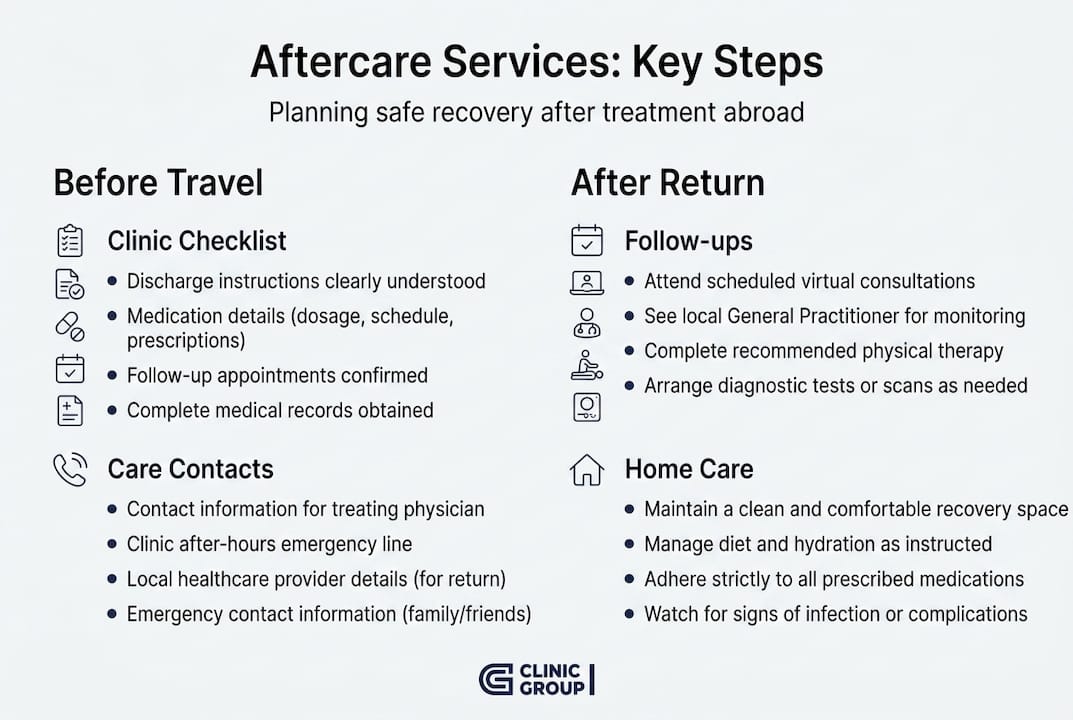
With a clear picture of what aftercare involves and where the gaps lie, you can take practical steps to protect your recovery before you ever board a flight. Pre-travel planning is the single most important factor in aftercare success, and it means verifying escalation paths, understanding NHS limitations, and factoring potential local costs into your overall savings calculation.
Follow these steps when planning:
- Research aftercare provision early: Ask your chosen clinic for a written aftercare plan covering at least the first four weeks post-procedure
- Clarify all costs in advance: Request a full itemised breakdown, including what is included and what is chargeable
- Confirm escalation protocols: Ask how the clinic handles complications after you have returned home, including out-of-hours contacts and remote consultation options
- Understand NHS boundaries: Speak to your GP before travelling to understand what support, if any, they can offer on your return
- Plan your return flight carefully: Factor in the recommended wait time of at least 24 to 72 hours post-surgery before flying, and book flexible tickets where possible
- Gather all documentation: Request your full medical records, procedure notes, implant details, and prescriptions in writing before you leave the clinic
- Identify a local private provider: Research a private nurse or aftercare clinic near your home who can manage wound care and stitch removal if needed
Pro Tip: When calculating your savings from treatment abroad, include a realistic estimate for private aftercare at home. This might be £100 to £400 depending on your procedure. For most treatments, the savings still make overseas care highly worthwhile, but this figure keeps your budget honest.
Communication between your overseas clinic and your domestic GP can be surprisingly effective when you provide thorough documentation. A well-written discharge summary in English, with contact details for the treating specialist, means your home GP is far better placed to support your ongoing care.
Beyond the basics: what most guides won’t tell you about aftercare
Here is something the glossy medical tourism brochures rarely mention: many clinics abroad are excellent at the procedure itself but only moderately prepared to support patients who develop complications after returning home. This is not bad faith. It is simply a structural limitation. A clinic in Turkey or Poland does not have a representative in your town.
What experienced medical tourists consistently report is that the emotional and logistical weight of managing aftercare at home is far greater than they expected. Chasing down a local nurse for stitch removal, explaining a foreign procedure to an unfamiliar GP, or interpreting post-operative instructions in a second language are genuinely challenging. These are not edge cases. They happen regularly.
The patients who navigate this best are those who treat aftercare as a primary consideration, not an afterthought. They ask hard questions of their clinic before booking, set aside a specific aftercare budget, and identify domestic support before they travel. The savings from treatment abroad are real and substantial. Protecting those savings means planning the full recovery journey, not just the procedure itself.
Find the right care for your treatment journey
At Clinic Group, we understand that treatment abroad is only as successful as the recovery that follows it. That is why we connect patients with trusted healthcare providers who prioritise transparent aftercare planning alongside high-quality procedures. Whether you are exploring dental implants, cosmetic surgery, or regenerative therapies, our platform makes it straightforward to review clinics, compare aftercare commitments, and make an informed choice. Browse our full range of treatment options and speak with our team to find the coordinated care that gives your recovery the best possible foundation.
Frequently asked questions
What counts as aftercare in medical tourism?
Aftercare includes all supportive medical services needed after your procedure abroad, such as wound checks, stitch removal, medication guidance, and monitoring for complications. According to post-surgical care standards, this covers wound inspection, cleaning, hygiene advice, pain management, and mobility assistance.
Who pays for aftercare after treatment abroad?
Aftercare costs are often paid out-of-pocket by the patient. Reimbursement may be possible on a case-by-case basis depending on your provider, your insurance policy, and local regulations.
Can the NHS provide routine aftercare for procedures done abroad?
The NHS generally assists with emergencies but does not provide routine elective aftercare for procedures performed overseas. As CDC guidance confirms, implant-related issues are typically limited to the origin clinic, and you should arrange routine aftercare with your original provider.
How soon can I travel home after a medical procedure abroad?
It is safest to wait at least 24 to 72 hours after your operation before flying. Early travel risks thrombosis, making this waiting period important for reducing serious post-operative complications during your journey home.