Your guide to booking treatments abroad safely
TL;DR:
- Booking treatments abroad requires thorough preparation, verified clinic selection, and comprehensive aftercare planning. Patients should consult their GP, arrange specialist insurance, and choose accredited providers with transparent reviews before proceeding. Proper planning ensures safer outcomes, cost savings, and effective recovery management.
Booking treatments abroad is the process of arranging medical or dental procedures in another country, covering everything from clinic selection and payment to travel logistics and post-procedure aftercare. This guide to booking treatments abroad is designed for UK and European patients who want to access high-quality care at transparent prices, without compromising on safety. Done correctly, medical tourism through verified platforms such as Clinicgroup delivers real savings alongside European standards of care. Done carelessly, it exposes patients to financial loss, clinical complications, and inadequate follow-up. The difference between the two outcomes almost always comes down to preparation.
What preparations are essential before booking treatments abroad?
Preparation is the single most important phase of any treatment abroad, and it begins well before you contact a clinic. Skipping this stage is the most common reason patients encounter problems during or after their procedure.

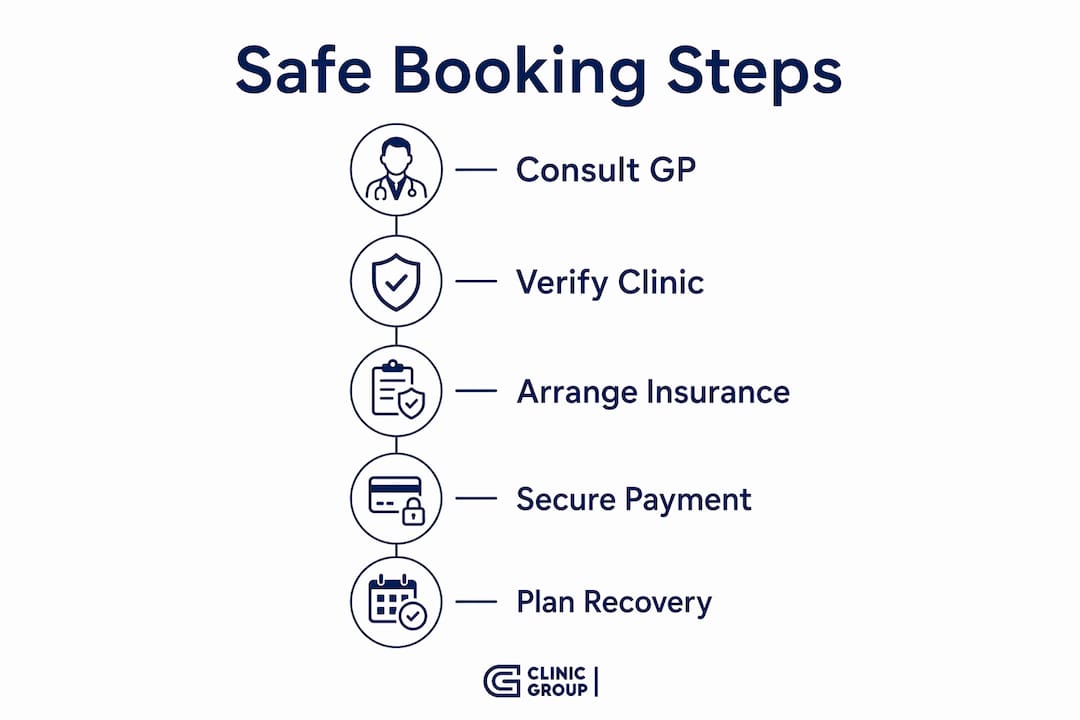
Start by discussing your intended treatment with your GP or a specialist at home. This conversation serves two purposes: confirming that you are medically suitable for the procedure, and establishing a baseline record that your UK clinician can refer to if complications arise on your return. UK Travel Aware advises that booking and payment should only happen after fully considering all treatment options and aftercare plans, since the NHS may not cover cosmetic treatment aftercare. That is a significant financial and clinical risk that many patients overlook.
Pre-travel health preparation is equally non-negotiable. The CDC Yellow Book 2026 confirms that pre-travel consultation, including up-to-date vaccination, medications review, and mental health screening, is a critical step in reducing the health risks of medical travel. This applies whether you are travelling to Albania, Dubai, or anywhere else for treatment.
Insurance is where many patients make a costly error. Standard travel insurance becomes invalid when planned treatment abroad is the purpose of travel. You need specialist medical travel insurance that explicitly covers surgical complications, emergency repatriation, and extended stays. Arrange this well in advance and read the policy terms carefully.
Before you travel, gather the following:
- A written summary of your medical history from your GP, translated into English if your records are in another language
- Confirmation of any medications you take regularly, including dosages
- A specialist medical travel insurance policy covering complications and emergency travel
- Up-to-date vaccinations relevant to your destination
- Written aftercare instructions agreed with your home clinician
Pro Tip: Ask your GP to write a brief clinical summary specifically for the treating clinic abroad. This single document can prevent miscommunication and significantly improve the quality of your pre-operative assessment.
How to research and choose verified medical clinics and specialists abroad?
Choosing the right clinic is the most consequential decision in the entire booking process. The quality of your outcome depends far more on the credentials of your provider than on the price you pay.
Accredited platforms such as Clinicgroup publish verified listings of clinics and specialists, including credentials, certifications, and patient reviews. Using a platform of this kind removes much of the uncertainty involved in direct provider contact. Reliable third-party platforms reduce risks associated with direct provider contact by providing patient advocacy and structured communication channels. This matters because unverified providers are one of the leading sources of poor outcomes in medical tourism.
When evaluating a clinic, check the following:
- Accreditation from a recognised body such as the Joint Commission International (JCI) or an equivalent national authority
- Board certification of the specialist who will perform your procedure
- Transparent pricing with no hidden charges
- A clear aftercare protocol, including what happens if complications arise
- Patient reviews that specifically address outcomes, staff conduct, and post-procedure support
Understanding medical tourism accreditation is particularly useful here, as certification standards vary significantly between countries and procedure types.
Reading patient reviews requires a degree of critical thinking. Focus on reviews that describe the full patient journey rather than just the initial experience. Positive comments about communication, follow-up care, and how the clinic handled unexpected issues are more informative than general praise. Checking clinic reviews before travelling is one of the most reliable ways to identify providers who deliver consistent, safe care.
| Clinic evaluation factor | What to look for |
|---|---|
| Accreditation | JCI certification or equivalent national body recognition |
| Specialist credentials | Board certification in the relevant surgical or dental specialty |
| Pricing transparency | Itemised cost breakdown with no ambiguous fees |
| Aftercare protocol | Written plan covering follow-up, complications, and emergency contact |
| Patient reviews | Detailed accounts covering outcomes and post-procedure support |
Pro Tip: Request a video consultation with the specialist who will perform your procedure before committing to any booking. A reputable clinic will always accommodate this request.
What are the critical steps for booking treatment and handling payment securely?
Once you have identified a verified clinic and confirmed your suitability for treatment, the booking process itself requires careful management. Rushing this stage is a common source of financial and clinical risk.
Follow these steps in order:
- Confirm all treatment details in writing. This includes the exact procedure, the name of the specialist performing it, the total cost, what is included in that cost, and the cancellation and refund policy. Never proceed on the basis of a verbal agreement alone.
- Keep a complete written record of all communications. Save emails, WhatsApp messages, and any documentation sent by the clinic. These records protect you if disputes arise.
- Pay by credit card or a trusted payment platform. Paying by credit card provides consumer protection under Section 75 of the Consumer Credit Act for transactions between £100 and £30,000. Cash payments offer no recourse if something goes wrong.
- Understand the full cost of your treatment journey. The procedure fee is rarely the only expense. Factor in flights, accommodation near the clinic, pre-operative tests, post-operative medications, and any follow-up appointments.
- Schedule your treatment dates with recovery time built in. Do not book a return flight for the day after a surgical procedure. Allow sufficient time in-country as advised by your clinic and confirmed by your home clinician.
Real risk management starts only after aftercare and complication planning are fully clarified. Patients should never pay a deposit until these details are confirmed with their UK specialists, as Travel Aware explicitly recommends.
Pro Tip: Use a dedicated email address for all treatment-related correspondence. This keeps your records organised and makes it straightforward to retrieve documentation quickly if you need it.
How to plan and manage travel logistics and recovery after treatment?
Travel logistics and recovery planning are areas where patients consistently underestimate the complexity involved. A well-planned treatment trip accounts for what happens after the procedure, not just before it.
Patients undergoing surgery with general anaesthesia should plan to stay in the treatment country for a minimum of ten days post-procedure. Flying too soon after anaesthesia increases the risk of serious complications including deep vein thrombosis and wound dehiscence. This is not a guideline to negotiate around.
Consider the following when planning your travel and recovery:
- Book accommodation within easy reach of the clinic, ideally a partner hotel recommended by your provider
- Arrange for a companion to travel with you, particularly for surgical procedures
- Confirm emergency contact details for the clinic and local emergency services before you travel
- Identify the nearest hospital to your accommodation in case of urgent complications
- Prepare a written summary of your procedure and medications to carry with you at all times
After your procedure, obtaining a full medical report in English is non-negotiable. This document should include the procedure performed, materials used (such as implant specifications), post-operative instructions, and recommended follow-up timeline. Your UK GP or specialist cannot provide effective aftercare without it.
| Recovery stage | Key action |
|---|---|
| Immediately post-procedure | Confirm medical report received in English before discharge |
| Days 1 to 3 | Rest at accommodation near clinic; attend any scheduled follow-up appointments |
| Days 4 to 10 | Monitor for signs of infection or complications; maintain clinic contact |
| Before flying home | Receive written clearance from treating specialist |
| On return to UK | Share full medical report with GP; schedule follow-up appointment |
An aftercare checklist for patients is a practical tool for managing this stage systematically.
What common mistakes should patients avoid when booking abroad?
The most damaging mistakes in medical tourism are predictable and preventable. Understanding them in advance is one of the most useful things you can do before booking.
Complications after surgery abroad affect up to 53% of patients, and costs for the NHS treating those complications can reach £20,000 per patient. The average hospital stay for complications exceeds 17 days. These figures demonstrate that a low procedure price is not a saving if the total risk is not properly evaluated.
The most frequent errors patients make include:
- Booking without a confirmed aftercare plan or prior consultation with their home GP
- Choosing a provider based on price alone, without verifying credentials or reading detailed patient reviews
- Assuming standard travel insurance covers planned medical procedures abroad
- Paying by cash or bank transfer without consumer protection
- Underestimating recovery time and booking return travel too soon after surgery
“Low procedure price can be misleading if complication rates and aftercare capacity are not considered. Total cost and risk evaluation is the only honest comparison.” — Bangor University research, 2026
Verifying clinic credentials before travelling takes a matter of hours and can prevent outcomes that take months to resolve. The patients who experience the worst outcomes are almost always those who prioritised speed and price over due diligence.
Key takeaways
Booking treatments abroad safely requires verified clinic selection, specialist insurance, written payment protection, and a confirmed aftercare plan before any deposit is paid.
| Point | Details |
|---|---|
| Prepare before you book | Consult your GP, arrange specialist travel insurance, and gather medical records before contacting any clinic abroad. |
| Verify every provider | Use accredited platforms and check JCI certification, specialist credentials, and detailed patient reviews before committing. |
| Protect your payment | Pay by credit card for consumer protection and confirm all costs in writing, including travel and aftercare expenses. |
| Plan your recovery window | Allow a minimum of ten days in-country after surgery and obtain a full English-language medical report before flying home. |
| Avoid common pitfalls | Never book without an aftercare plan, and never assume standard travel insurance covers planned treatment abroad. |
Our perspective on booking treatments abroad
At Clinicgroup, we have supported thousands of patients from the UK and across Europe in accessing treatments in Albania and Dubai. The pattern we observe most consistently is this: patients who invest time in preparation have better outcomes, fewer complications, and greater confidence throughout their journey. Those who rush the process, drawn by a low headline price, are the ones who contact us later with problems that could have been avoided.
The rise of integrated medical tourism networks has changed what patients can reasonably expect from the booking process. Clinic matching, travel logistics, partner hotel coordination, and structured aftercare planning are no longer premium add-ons. They are the baseline of a responsible patient journey. Patients who book through verified platforms rather than contacting clinics directly benefit from accountability structures that simply do not exist in unmediated arrangements.
The most important shift in thinking we encourage is this: treat the aftercare plan as part of the booking decision, not as something to arrange later. If a clinic cannot provide a clear, written aftercare protocol before you pay, that is the answer to your question about whether to book with them.
— Clinic
How Clinicgroup supports your treatment journey abroad
Clinicgroup connects patients with verified clinics across Albania and Dubai, all operating to European standards of care. Every clinic in the network is assessed for accreditation, specialist credentials, and patient outcomes before being listed on the platform. When you book through Clinicgroup, you receive support at every stage: clinic matching based on your specific treatment needs, assistance with travel logistics and partner hotel arrangements, and structured aftercare planning to ensure continuity of care when you return home.
Explore the full range of available treatments across dentistry, hair transplants, plastic surgery, non-surgical aesthetics, and wellness programmes. Whether you are considering dental implants in Tirana or a hair transplant in Dubai, Clinicgroup provides the verified network and patient support to make your journey safe and well-managed.
FAQ
What should I do before booking a medical treatment abroad?
Consult your GP to confirm suitability, arrange specialist medical travel insurance, and gather your medical records in English. Travel Aware recommends completing all aftercare planning before making any payment.
How do I know if a clinic abroad is safe and reputable?
Check for accreditation from a recognised body such as the Joint Commission International, verify the specialist’s board certification, and read detailed patient reviews. Platforms like Clinicgroup list only verified clinics that meet defined quality standards.
What type of insurance do I need for treatment abroad?
Standard travel insurance does not cover planned medical procedures. You need specialist medical travel insurance that explicitly covers surgical complications, emergency repatriation, and extended in-country stays.
How long should I stay abroad after surgery?
Patients undergoing general anaesthesia should remain in the treatment country for a minimum of ten days post-procedure to reduce the risk of serious travel-related complications.
What payment method is safest when booking treatments abroad?
Credit card payment offers the strongest consumer protection, covering transactions between £100 and £30,000 under Section 75 of the Consumer Credit Act. Avoid cash payments and unprotected bank transfers.