What is patient aftercare: your complete guide

TL;DR:
- Patient aftercare is a structured, ongoing support system that begins immediately after discharge to ensure full recovery and prevent complications. It includes clear instructions, follow-up monitoring, pain management, emotional support, and involvement of support persons, all tailored to specific treatment types. Engaging fully in aftercare significantly improves long-term outcomes and reduces the risk of setbacks, especially when supported by digital communication tools.
Patient aftercare is defined as the structured, ongoing support provided to individuals following a medical procedure, bridging the period between clinical discharge and full recovery. It covers everything from medication instructions and wound care to follow-up appointments and emotional support. Without it, even technically successful procedures carry a higher risk of complications, setbacks, and poor long-term outcomes. Modern aftercare now includes digital communication tools such as automated messaging, which achieves a 98% open rate compared to just 20% for email, making post-treatment care more consistent and accessible than ever before.
What is patient aftercare and why does it matter?
Patient aftercare, also referred to in clinical settings as post-treatment care or postoperative management, is the coordinated programme of support that begins the moment a patient leaves a clinical environment. It is not a single appointment or a printed leaflet. It is a continuous process that adapts to the patient’s progress, covering physical recovery, medication adherence, psychological wellbeing, and communication with the clinical team.

The importance of aftercare is frequently underestimated. Many patients assume that a successful procedure means the hard work is done. In reality, the transition from a controlled clinical environment to daily life is one of the highest-risk phases of any treatment. Complications such as infection, blood clots, or emotional distress are most likely to emerge in the days and weeks immediately following discharge.
Clinicgroup’s approach to patient aftercare reflects this reality. Every treatment journey coordinated through the platform includes structured aftercare protocols, not as an optional extra, but as a core component of the care model. This matters particularly for international patients travelling from the UK or Europe for treatment in Albania or Dubai, where continuity of care across borders requires deliberate planning and reliable communication channels.
What are the key components of post-treatment care?
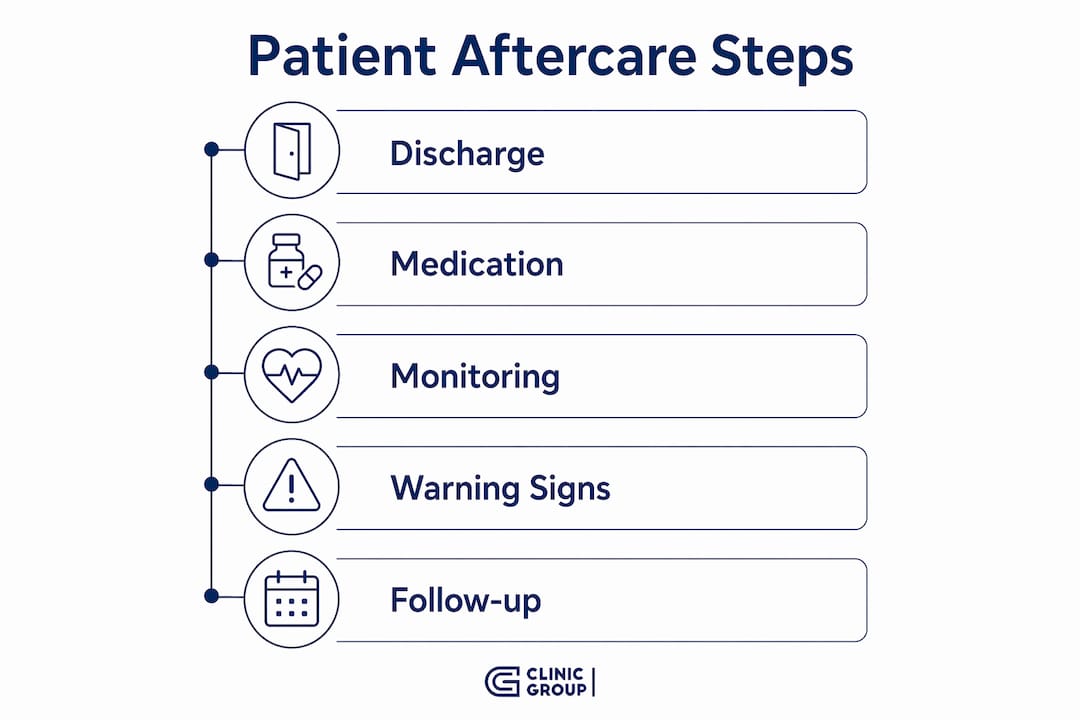
Effective aftercare for patients follows a clear progression through several distinct phases. Understanding these stages helps you know what to expect and how to engage actively with your recovery.
-
Immediate post-procedure instructions. Within hours of discharge, you will receive specific guidance on medication schedules, wound care, dietary restrictions, and activity limitations. These instructions are time-sensitive and non-negotiable. Following them precisely in the first 48 hours significantly reduces the risk of early complications.
-
Monitoring and follow-up check-ins. Structured follow-ups, whether in person, by telephone, or via digital messaging, allow your clinical team to track healing progress and identify warning signs early. Clinical practice guidelines standardise this monitoring process, reducing variability in care and supporting shared decision-making between patients and clinicians.
-
Pain management and symptom control. Adequate pain control is not simply about comfort. Unmanaged pain leads to restricted movement, which in surgical patients increases the risk of complications such as deep vein thrombosis (DVT) or pneumonia. Your care team will provide a clear protocol for managing discomfort safely.
-
Rehabilitation and gradual return to activity. For procedures involving surgery or physical recovery, a phased return to normal activities is standard. Most patients require one to three weeks before resuming everyday tasks, with restrictions on driving and major decision-making for at least two days following anaesthesia.
-
Emotional and psychological support. Recovery is not purely physical. Anxiety, low mood, and frustration are common during the recovery period. Acknowledging this and having access to support, whether through your clinical team, a counsellor, or a trusted support person, forms a genuine part of patient care guidelines.
-
Caregiver and support person involvement. Having a trusted person present during the initial recovery stage reduces the risk of complications. Anaesthesia affects cognitive function for up to two days, meaning patients should not be left alone to manage complex decisions or physical tasks.
Pro Tip: Before your procedure, prepare a written list of your medications, emergency contact numbers, and your clinic’s aftercare communication channel. Having this ready on your phone or printed at home removes stress during the early recovery period when clear thinking is harder.
Why is aftercare critical for successful recovery?
Structured aftercare is the difference between a procedure that delivers lasting results and one that falls short due to preventable complications. The evidence for this is consistent across treatment types.
- Patients who follow structured aftercare protocols are significantly less likely to develop postoperative complications such as infection, wound breakdown, or DVT.
- Without structured aftercare, 40 to 60% of patients in chronic recovery contexts experience relapse or significant setbacks within the first year. This figure underlines how much long-term outcomes depend on sustained support, not just the procedure itself.
- Many patients underestimate how much systemic stress even minimally invasive procedures place on the body. Stress hormones released during and after surgery cause exhaustion that can persist for weeks, even when a patient feels clear-headed. Resuming normal activity too soon is one of the most common causes of setbacks.
- Patient adherence to aftercare protocols, including movement, hydration, diet, and medication, directly determines the speed and quality of recovery.
- Psychological support during aftercare reduces anxiety and improves patient satisfaction, which in turn supports better physical outcomes.
“Aftercare is not an optional extra bolted onto the end of a treatment. It is a clinical component in its own right, and patients who engage with it fully consistently achieve better outcomes.”
The role of early warning signs cannot be overstated. Identifying and acting on symptoms such as unusual swelling, fever, or persistent pain during the aftercare period significantly reduces the risk of serious postoperative complications. This is why maintaining an open, responsive communication channel with your clinical team throughout recovery is not simply advisable. It is clinically significant.
How does aftercare differ by procedure type?
Patient recovery support is not one-size-fits-all. The nature, duration, and focus of aftercare vary considerably depending on the type of treatment received. The table below outlines the key differences across four common treatment categories.
| Treatment type | Primary aftercare focus | Typical duration | Key considerations |
|---|---|---|---|
| Surgery (cosmetic or medical) | Physical recovery, wound care, pain management | 1 to 6 weeks | Activity restrictions, compression garments, scar management |
| Chronic illness management | Preventing complications, wellness programme adherence | Ongoing | Medication reviews, lifestyle adjustments, regular monitoring |
| Addiction treatment | Relapse prevention, ongoing therapy, family involvement | Months to years | Effective addiction aftercare includes therapy and sober living support |
| Aesthetic procedures | Wound care, swelling management, follow-up visits | Days to weeks | Sun protection, product restrictions, review appointments |
For surgical patients, the aftercare checklist covers physical milestones such as reducing swelling, resuming light walking, and attending wound review appointments. For those managing chronic illness, wellness programme guidance focuses on sustaining healthy behaviours and preventing deterioration over time.
Aesthetic procedure aftercare, which is particularly relevant to Clinicgroup patients receiving treatments such as hair transplants, rhinoplasty, or dental implants, requires close attention to wound hygiene, avoiding sun exposure, and attending scheduled follow-up visits to assess healing. These steps are not precautionary. They directly influence the final result.
Pro Tip: Ask your clinic for a written aftercare schedule before your procedure date, not after. Knowing exactly what is expected of you at each stage, including which symptoms to report and when, removes uncertainty and helps you plan your recovery period at home.
What practical steps should patients follow during aftercare?
Active participation in your own recovery is the single most controllable factor in achieving a good outcome. The following steps reflect standard patient care guidelines across treatment types.
- Follow medication instructions precisely. Take prescribed medications at the correct times and complete the full course, even if you feel well. Stopping antibiotics early, for example, increases the risk of infection.
- Avoid driving and major decisions for at least 48 hours post-anaesthesia. Anaesthesia impairs cognitive function for up to two days. Arrange transport and ask a trusted person to stay with you during this period.
- Prioritise rest and hydration. Your body repairs tissue, fights potential infection, and restores hormone balance during rest. Adequate hydration supports circulation and reduces the risk of complications such as DVT.
- Engage with digital aftercare communications. Clinics using automated messaging platforms send timely reminders, symptom checklists, and advice directly to your phone. Responding to these check-ins keeps your clinical team informed and allows early intervention if needed.
- Know your warning signs. Fever above 38°C, increasing rather than decreasing pain, unusual discharge from a wound, or significant swelling after the first 48 hours all warrant prompt contact with your clinical team.
- Coordinate with a support person. Having someone assist with transport, medication reminders, and daily tasks during the first week of recovery reduces both physical risk and psychological stress.
Pro Tip: Keep a simple daily recovery log, noting pain levels, medication taken, and any symptoms. This takes two minutes and gives your clinical team precise information during follow-up calls, rather than relying on memory.
Key takeaways
Effective patient aftercare is the structured, evidence-based support that transforms a successful procedure into a lasting recovery, and patients who engage with it fully achieve measurably better outcomes.
| Point | Details |
|---|---|
| Aftercare starts at discharge | Post-treatment care begins the moment you leave the clinic, not at your first follow-up appointment. |
| Adherence drives outcomes | Following medication, activity, and dietary instructions directly determines recovery speed and quality. |
| Digital tools improve engagement | Automated messaging achieves a 98% open rate, keeping patients informed and clinics responsive throughout recovery. |
| Aftercare varies by treatment | Surgery, chronic illness, addiction, and aesthetic procedures each require distinct recovery support and timelines. |
| Warning signs need prompt action | Reporting fever, unusual pain, or wound changes early significantly reduces the risk of serious complications. |
Why aftercare deserves more attention than it typically receives
From our experience working with patients across Europe and the Middle East, aftercare is the phase of treatment that patients most frequently underestimate, and the one that most often determines whether they are satisfied with their results six months later.
There is a common pattern we observe. A patient undergoes a procedure, feels well within a few days, and assumes recovery is essentially complete. They resume normal activities, skip a follow-up appointment, or stop taking prescribed medication because symptoms have eased. Then, weeks later, a complication emerges that was entirely preventable.
The transition from clinical care to home recovery is genuinely high-risk. Your body is doing significant internal work that is not visible or felt in the early days. Stress hormone responses persist well beyond the point at which you feel clear-headed. This is not a reason for anxiety. It is a reason to take the recovery period seriously and follow your aftercare plan with the same discipline you applied to choosing your procedure.
We also believe that digital aftercare tools represent a genuine step forward in patient support, not a replacement for clinical care, but a reliable way to keep patients informed, remind them of key steps, and allow clinical teams to identify concerns before they escalate. Clinics that use structured automated systems save over two hours daily in manual follow-ups and retain nearly double the number of first-time patients. That efficiency translates directly into better, more consistent care for you.
The patients who recover best are those who treat aftercare as part of the treatment, not as an inconvenient obligation after it.
— Clinicgroup
How Clinicgroup supports your recovery after treatment abroad
Clinicgroup connects patients from the UK and across Europe with verified clinics and specialists in Albania and Dubai, covering treatments from dental implants and hair transplants to rhinoplasty and wellness programmes. Every treatment journey includes structured aftercare as standard, not as an add-on. Patients receive clear post-treatment protocols, access to digital follow-up communications, and direct contact with their clinical team throughout recovery. Transparent pricing, European care standards, and board-certified specialists are consistent across the network. If you are planning a procedure abroad and want to understand exactly what your aftercare and recovery will involve, explore Clinicgroup’s full range of available treatments or contact the team for a personalised consultation.
FAQ
What is patient aftercare in simple terms?
Patient aftercare is the structured support and guidance provided to you after a medical procedure, covering medication, wound care, follow-up appointments, and monitoring until you reach full recovery.
How long does aftercare typically last after surgery?
Most patients require one to three weeks to resume normal activities following surgery, though full aftercare, including follow-up visits and activity restrictions, may extend for several weeks depending on the procedure.
Why is aftercare important for aesthetic procedures like hair transplants or dental implants?
Aftercare for aesthetic procedures directly influences the final result. Wound hygiene, avoiding sun exposure, attending review appointments, and following product restrictions all affect healing quality and long-term outcomes.
What warning signs should I report during my recovery?
Contact your clinical team promptly if you experience a fever above 38°C, pain that increases rather than decreases after the first 48 hours, unusual wound discharge, or significant swelling beyond the initial recovery period.
Does Clinicgroup provide aftercare support for international patients?
Yes. Clinicgroup includes structured aftercare protocols in every treatment journey, with digital follow-up communications and direct access to the clinical team to support patients throughout their recovery, regardless of where they are based.