How to compare clinic features for safe medical travel
TL;DR:
- Clinic safety, accreditation, and aftercare quality are essential factors in choosing medical abroad.
- Poland and Hungary offer stronger regulation and post-treatment support compared to Turkey’s variable standards.
- Prioritizing safety and aftercare ensures long-term satisfaction over just seeking the lowest price.
Choosing a clinic abroad is not simply a matter of finding the lowest price. The difference between a well-regulated facility and a poorly monitored one can mean the difference between a smooth recovery and a costly, painful complication that requires corrective treatment back home. Medical tourism across Europe and the Middle East continues to grow, attracting patients from the UK and across the continent who are seeking savings on dentistry, cosmetic surgery, hair transplants, and wellness treatments. But clinic standards vary considerably, and without a clear framework for comparison, it is easy to be misled by polished websites and promotional packages. This guide gives you the practical criteria, honest destination comparisons, and decision-making tools you need to choose with real confidence.
Table of Contents
- What to look for when comparing clinic features
- Turkey: Budget-friendly dentistry and cosmetic options
- Poland and Hungary: Enhanced safety and EU regulation
- Direct comparison: Clinic features head-to-head
- Our take: Why safety and support should lead your clinic choice
- Find the right clinic for you with Clinic Group
- Frequently asked questions
Key Takeaways
| Point | Details |
|---|---|
| Safety first, cost second | EU-regulated clinics in Poland and Hungary offer superior safety and aftercare compared to cheaper Turkish alternatives. |
| Transparency is crucial | Request clear, itemised quotes and verify a clinic’s accreditations before booking. |
| Aftercare matters most | Prioritise clinics that provide robust post-treatment support and clear communication throughout your recovery. |
| Tailor to your needs | Choose a clinic based on personal priorities—whether that’s proximity, price, language support or legal protection. |
What to look for when comparing clinic features
Now that you understand the overall challenge, let us break down the key factors that truly matter when evaluating clinics across borders. Whether you are exploring the treatments available or shortlisting trusted healthcare providers, these criteria form the foundation of any safe and informed decision.
Safety standards and accreditation should always be your first checkpoint. Look for clinics that hold internationally recognised certifications such as Joint Commission International (JCI) accreditation, or that operate under EU regulatory frameworks. JCI accreditation, in particular, signals that a clinic has been independently assessed against rigorous patient safety and quality benchmarks. Clinics operating within the European Union must also comply with national healthcare regulations that set minimum standards for hygiene, staff qualifications, and equipment.
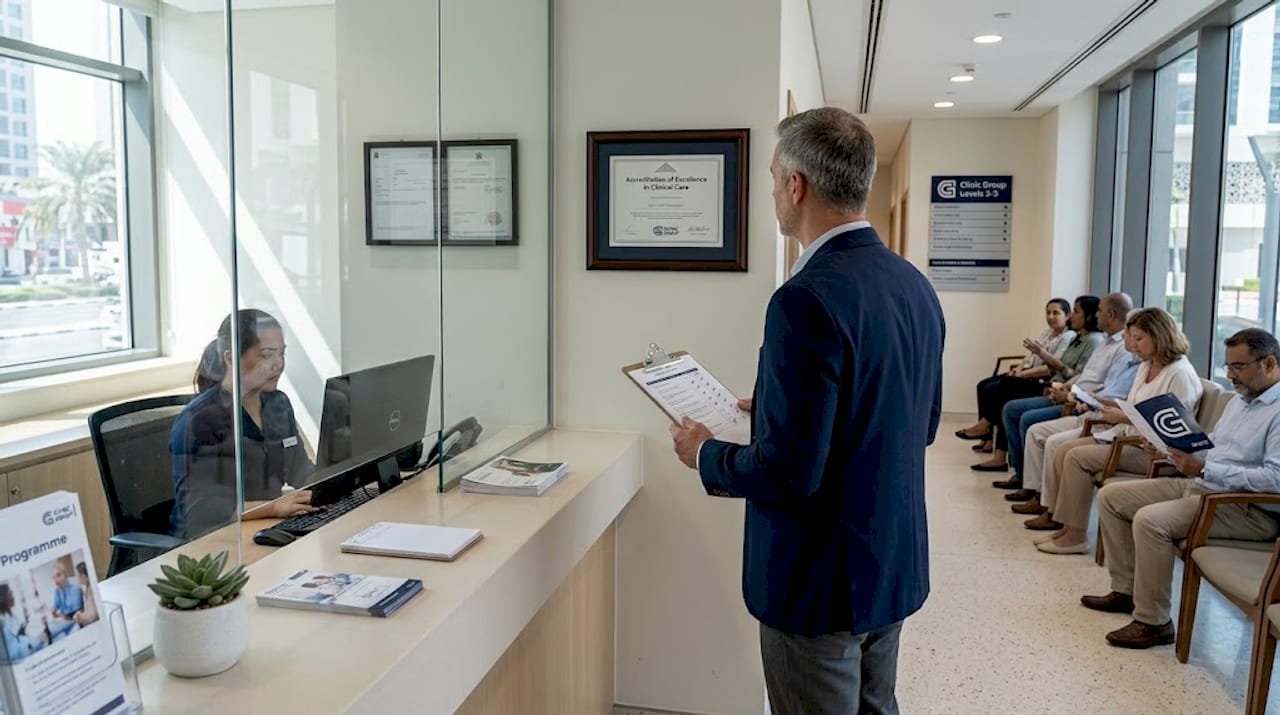
Aftercare quality is frequently underestimated by first-time medical tourists. For international patients, aftercare is especially critical because you will likely be returning home within days of a procedure. A reputable clinic will offer structured follow-up, remote consultation options, and clear written instructions for your recovery. Ask specifically what happens if a complication arises after you return home.
Here are the key features to assess before committing to any clinic:
- Accreditation: JCI, ISO, or EU regulatory compliance
- Aftercare provision: Remote follow-up, emergency contact, written recovery plans
- Language support: English-speaking staff for consultations and post-op care
- Cost transparency: Itemised quotes with no hidden fees for anaesthesia, diagnostics, or accommodation
- Legal recourse: Formal complaint procedures and patient rights protections
Cost transparency deserves particular attention. Always request a fully itemised breakdown before signing anything. Hidden charges for pre-operative tests, overnight stays, or medication can significantly inflate the final bill. As EU regulation confirms, countries like Poland and Hungary provide reliable regulation, better aftercare, and English language support, and are often worth a 20 to 30 per cent premium over lower-cost alternatives for the added safety they deliver.
Pro Tip: Before booking, send a written list of questions to each clinic and assess the quality and speed of their responses. A clinic that communicates clearly before your procedure is far more likely to support you properly afterwards.
Turkey: Budget-friendly dentistry and cosmetic options
With the core evaluation criteria in mind, let us apply them to some of the most popular destinations, starting with Turkey. Turkey has become one of the world’s leading medical tourism destinations, particularly for dental treatment and cosmetic surgery. The combination of very low prices, modern private hospitals, and fast appointment availability makes it an attractive option for patients who are price-sensitive and time-conscious.
Turkey’s dentistry pricing is among the most competitive globally, with procedures such as All-on-4 dental implants typically costing between €2,500 and €4,500, compared to significantly higher prices in Western Europe. High-volume clinics such as Cinik Dental hold JCI accreditation and report satisfaction rates of 4.8 out of 5, with approximately 98 per cent patient satisfaction. Many Turkish clinics offer VIP packages that include airport transfers, hotel accommodation, and a dedicated patient coordinator, making the logistics of medical travel considerably easier to manage.
However, the Turkish market is not without its risks. Quality across the sector is highly variable, and not every clinic operates to the same standard as the top-tier providers. Patients who select lower-cost clinics without thorough research have reported inconsistent outcomes, particularly in cosmetic surgery. Legal protections for foreign patients are also limited. If something goes wrong, pursuing a formal complaint or compensation from outside Turkey can be extremely difficult and expensive.
Here is a summary of the key strengths and limitations of Turkish clinics:
| Feature | Turkey |
|---|---|
| Price range (All-on-4 implants) | €2,500 to €4,500 |
| JCI-accredited clinics available | Yes (selected clinics) |
| Aftercare for international patients | Variable |
| English language support | Available at premium clinics |
| Legal recourse for foreign patients | Limited |
| Typical patient satisfaction (top clinics) | 4.8/5, ~98% |
“Turkey leads dentistry pricing globally, with high-volume JCI-accredited clinics offering strong satisfaction ratings. However, quality across the sector varies considerably, and legal recourse for international patients remains limited.”
For patients considering Turkish clinic listings, the safest approach is to focus exclusively on JCI-accredited facilities with verifiable patient reviews, and to read our safe dental treatment tips before making any commitment.
Pro Tip: When evaluating Turkish clinics, look beyond the clinic’s own website. Search for independent patient reviews on platforms like Trustpilot or Google, and specifically look for reviews from patients who experienced complications to see how the clinic responded.
Poland and Hungary: Enhanced safety and EU regulation
Having explored the Turkish landscape, let us turn to two of its main European competitors: Poland and Hungary. Both countries have built strong reputations in medical tourism precisely because they offer a compelling balance between affordability and regulatory rigour. Unlike Turkey, both operate within the European Union’s healthcare regulatory framework, which sets legally enforceable minimum standards for clinical practice, patient rights, and professional qualifications.
Poland’s cosmetic and dental sector is widely regarded as offering better safety outcomes than Turkey for cosmetic surgery, largely due to EU regulations that provide a consistent baseline of clinical standards. Poland is also frequently preferred for its aftercare provision and geographical proximity to the UK and Western Europe, making follow-up visits far more practical. Pricing in Poland typically runs 40 to 60 per cent lower than equivalent treatments in the UK, while still benefiting from EU oversight. Hungary, particularly Budapest, has long been established as a dental tourism capital, attracting hundreds of thousands of patients annually from Germany, Austria, the UK, and beyond.
The 20 to 30 per cent price premium you may pay over Turkish clinics for treatment in Poland or Hungary is often justified by the following advantages:
- EU regulatory compliance: Clinics must meet legally binding standards for hygiene, equipment, and staff qualifications
- Stronger patient rights: Formal complaint and compensation mechanisms are available under EU law
- Better aftercare infrastructure: Proximity to home countries makes follow-up appointments realistic
- English language support: Widely available across both countries, particularly in major cities
- Consistent clinical outcomes: Fewer reported complications compared to the variable Turkish market
For patients who are considering cosmetic and dental options in Central Europe, it is worth reading our detailed aftercare explanations to understand what a well-structured post-treatment plan should include. The quality of aftercare is often the single biggest differentiator between a positive and a negative medical tourism experience.
Key statistic: Poland offers treatments at 40 to 60 per cent below UK prices while maintaining full EU regulatory oversight, making it one of the strongest value-for-money destinations in European medical tourism.
Direct comparison: Clinic features head-to-head
It is helpful to see all these features lined up so you can weigh what is most important at a glance. The table below provides a direct comparison across Turkey, Poland, and Hungary for the features that matter most to medical tourists.
| Feature | Turkey | Poland | Hungary |
|---|---|---|---|
| Average price vs UK | 50–70% lower | 40–60% lower | 40–65% lower |
| EU regulatory framework | No | Yes | Yes |
| JCI-accredited clinics | Selected clinics | Selected clinics | Selected clinics |
| Aftercare for international patients | Variable | Generally strong | Generally strong |
| Legal recourse for foreign patients | Limited | EU law applies | EU law applies |
| English language support | Premium clinics | Widely available | Widely available |
| Proximity to UK | Longer travel | Shorter travel | Shorter travel |
As the data confirms, Turkey is 30 to 50 per cent cheaper than Hungary for comparable treatments, while Poland sits 40 to 60 per cent below UK pricing with the added benefit of EU oversight. This pricing gap is real and meaningful, particularly for major procedures such as full dental restorations or rhinoplasty. But price alone does not determine value.
Here is a quick situational guide to help you decide which destination suits your priorities:
- Choose Turkey if: Your budget is the primary constraint, you are selecting a verified JCI-accredited clinic, and you are comfortable with limited legal recourse
- Choose Poland if: You want EU regulation, strong aftercare, and reasonable proximity to the UK without paying Western European prices
- Choose Hungary if: You are focused on dental treatment specifically, want EU oversight, and are happy to travel to Central Europe for a well-established dental tourism infrastructure
The table below summarises the key takeaways for each destination:
| Priority | Best destination |
|---|---|
| Lowest price | Turkey |
| Strongest regulation | Poland or Hungary |
| Best dental infrastructure | Hungary |
| Best aftercare and proximity | Poland |
| Balanced value overall | Poland |
When you are ready to compare available treatments across destinations, it is also worth reviewing our consultation guidance to understand how to prepare for your first appointment with a clinic abroad.
Our take: Why safety and support should lead your clinic choice
Now, let us step back and share our honest view based on years of patient journeys and outcomes.
One of the most consistent patterns we observe is that patients who prioritise price above all else are disproportionately likely to report dissatisfaction, not because affordable treatment is inherently poor, but because low prices often correlate with reduced aftercare, less transparent communication, and weaker accountability structures. Two clinics can look almost identical in their marketing materials, with similar before-and-after photographs and comparable price lists, yet differ enormously in the quality of their post-operative support and their willingness to address complications.
Regulation and aftercare are not optional extras that you can forgo to save money. They are the infrastructure that protects you when things do not go to plan. And in medicine, even with the best surgeons and the best equipment, complications do occasionally occur. What separates a manageable complication from a serious long-term problem is almost always the quality of the response.
Our strong recommendation is to treat safety and aftercare as non-negotiable criteria, and then find the best price within that constraint rather than the other way around. Reading our guide to safe dental treatment abroad is a practical starting point for building that safety-first mindset before you begin comparing prices.
Long-term satisfaction with medical tourism almost always hinges more on the quality of care and follow-up than on the initial savings. A procedure that costs €500 less but requires €2,000 of corrective treatment at home is not a saving at all.
Find the right clinic for you with Clinic Group
If you prefer a shortcut to safe, reliable clinics, here is how Clinic Group helps. At Clinic Group, we work exclusively with verified, accredited clinics across Europe and the Middle East, screening every partner for safety standards, patient outcomes, and aftercare quality before listing them on our platform. You can see available treatments across dentistry, cosmetic surgery, hair transplants, and wellness, and filter by destination, procedure type, and budget. Our team is available to provide a free consultation to help you match your specific needs to the right clinic. Rather than spending hours researching independently, explore top clinics through a platform built around patient safety and transparent, honest information. Your health deserves nothing less.
Frequently asked questions
What is JCI accreditation and why does it matter?
JCI accreditation ensures a clinic meets international patient safety and care standards, offering extra reassurance for medical tourists that the facility has been independently assessed against rigorous benchmarks.
Are clinics in Turkey safe for dental implants?
Many Turkish clinics are JCI-accredited and report high satisfaction rates, with top facilities such as Cinik Dental achieving 98 per cent patient satisfaction, but overall quality across the sector is inconsistent and legal recourse remains limited, so careful research is essential.
Is it worth paying extra for an EU-regulated clinic?
Yes, the added cost of treatment in Poland or Hungary brings stricter EU regulation, better aftercare infrastructure, and formal legal protections that are simply not available to foreign patients seeking recourse in Turkey.
What aftercare services should I expect when choosing a clinic abroad?
Look for clinics offering 24/7 emergency contact, structured remote follow-up consultations, and clear written post-treatment instructions so your recovery is properly supported even after you return home.
How do I compare prices reliably between clinics in different countries?
Always request a fully itemised written quote covering all procedures, diagnostics, aftercare, and any extras, and remember that Turkish pricing for procedures such as All-on-4 implants typically ranges from €2,500 to €4,500, which can be 30 to 50 per cent lower than equivalent Hungarian pricing for the same treatment.