Dental travel: key benefits, risks and essential tips
TL;DR:
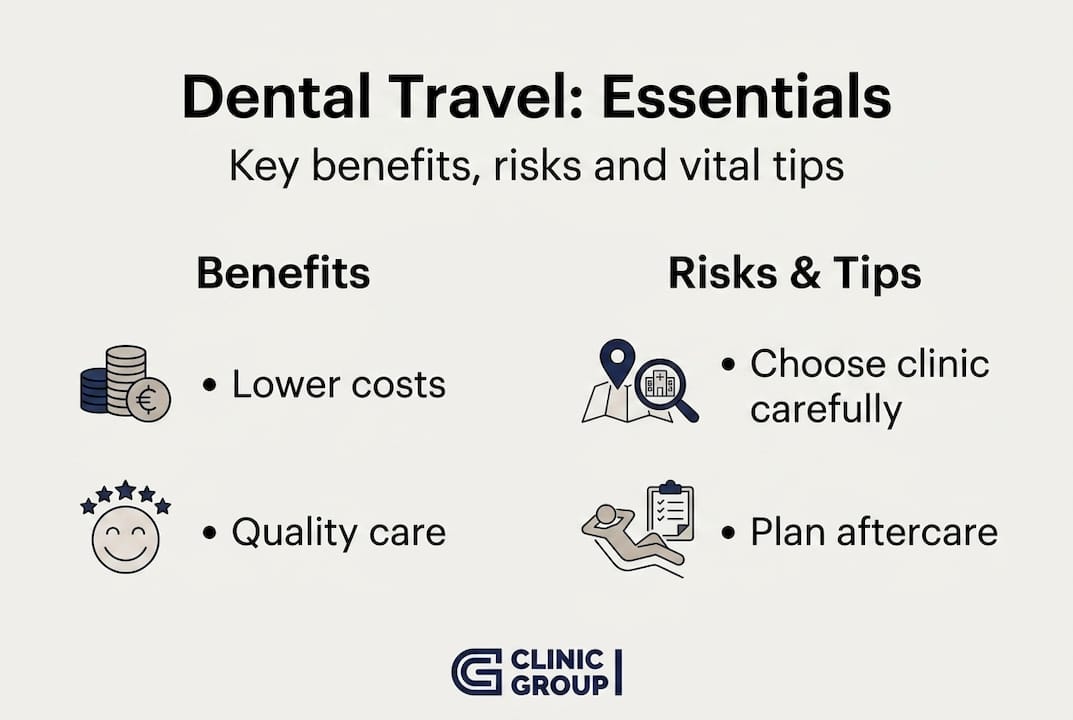
- Europeans are increasingly traveling abroad for affordable, high-quality dental treatments.
- Reputable clinics use the same materials and standards as Western Europe, despite lower costs.
- Success depends on careful clinic selection, thorough research, and proper aftercare planning.
More Europeans than ever are booking flights alongside their dental appointments, and the motivation goes well beyond simply cutting costs. There is a persistent misconception that travelling for dental care means accepting lower standards or taking unnecessary risks. In reality, thousands of patients from the UK, Italy, Germany, and beyond are accessing treatments such as implants, veneers, and full smile restorations at internationally accredited clinics abroad, often saving 50 to 70 per cent compared to home prices. This guide covers the real reasons people travel, what the risks actually look like, and how to protect yourself at every stage.
Table of Contents
- The driving factors behind dental travel
- Balancing benefits and risks of dental tourism
- How to choose a reputable dental clinic abroad
- Aftercare, follow-up and supporting your dental health
- A fresh perspective: what most guides miss about dental travel
- Take the next step towards safe, high-quality dental care abroad
- Frequently asked questions
Key Takeaways
| Point | Details |
|---|---|
| Significant savings possible | Travelling for dental care can dramatically lower costs without sacrificing quality when you choose a reputable clinic. |
| Risks need careful planning | Complications and hidden costs can arise, so research, preparation, and aftercare are essential. |
| Clinic vetting is crucial | Accreditations, reviews, and material brands are key indicators of safe dental providers abroad. |
| Aftercare can be overlooked | Planning for follow-up and knowing NHS limitations protects your investment and health. |
The driving factors behind dental travel
With the context set, let’s explore what makes travelling for dental care so attractive.
The price difference between Western European dental markets and destinations such as Hungary, Poland, and Turkey is significant enough to motivate even cautious patients. A single dental implant in the UK can cost anywhere from £2,000 to £2,800. The same procedure, using the same branded implant systems, often costs between £600 and £1,000 in Budapest or Warsaw. For patients requiring multiple implants or complex full-arch restorations, the savings easily reach five figures.
This is not a niche trend. The dental tourism market forecast highlights a strong 19.3% compound annual growth rate, with the market projected to reach $52.8 billion globally by 2033. Europe is the fastest-growing region within this sector, driven largely by patients from the UK, the Netherlands, and Scandinavia seeking care in central and eastern Europe.
Why affordability does not mean inferior care
The cross-border dental economy is shaped by price gaps that cluster patient demand around Hungary, Poland, and Turkey. The key insight is that lower prices reflect lower operational costs, not inferior materials or reduced clinical skill. Rent, staff salaries, laboratory fees, and administrative overheads are considerably lower in these countries. Reputable clinics use the same Nobel Biocare, Straumann, or Osstem implant systems you would find in London or Milan.
Popular destinations and what distinguishes them
| Destination | Typical savings vs UK | EU regulatory framework | Notable strengths |
|---|---|---|---|
| Hungary | 60 to 70% | Yes | Pioneer of dental tourism, high clinical volumes, English-speaking staff |
| Poland | 50 to 65% | Yes | EU consumer protections, convenient for short trips from the UK |
| Turkey | 70 to 75% | No | Maximum savings, large clinics, wider variation in quality |
Each destination suits different patient profiles. Hungary, particularly Budapest, has decades of experience hosting international dental patients and offers a mature ecosystem of clinics, aftercare support, and transport links. Poland is gaining ground rapidly, especially for patients who prefer to remain within EU legal and consumer protection frameworks. Turkey offers the greatest potential savings but demands the most careful vetting, as the higher patient volume creates a wider spread between outstanding and mediocre providers.
Key reasons driving the market’s growth include:
- Significant and measurable cost savings on complex treatments
- Short travel times from major UK and European cities
- High standards at accredited clinics using internationally recognised materials
- Waiting times abroad that are often days rather than months
- The ability to combine treatment with a short break or holiday
You can explore a wide range of dental treatment options to understand which procedures are most commonly sought abroad and what each involves before making any decisions.
Balancing benefits and risks of dental tourism
Understanding why people travel for dental care, it’s vital to weigh both the upsides and the real-world risks.
The financial case for dental travel is strong, but it does not exist in isolation. Clinical outcomes depend heavily on which clinic you choose, how much preparation you do beforehand, and how well you manage your aftercare once you return home. Getting this wrong can cost significantly more than staying at home.
The real complication rate
A BDA survey found that 86% of dentists in the UK report treating patients who have experienced problems following dental work carried out abroad. The complication rate sits at approximately 14%, with issues ranging from infections and poorly fitted crowns to implant failures linked to unbranded components or rushed osseointegration periods. Osseointegration is the process by which a dental implant fuses with the jawbone, and it cannot be safely accelerated.
“Rescue costs for failed overseas dental treatments typically run two to three times the original procedure cost, with patients often left to fund corrections entirely out of pocket.” British Dental Association
What the NHS will and will not cover
This point is critical and frequently misunderstood. If you have elective or cosmetic dental work carried out abroad and something goes wrong, NHS dentists are under no obligation to remedy the problem at NHS rates. Many will treat the resulting emergency on the NHS, but the corrective or restorative work falls outside NHS provision. Private rescue treatment can be extremely costly, particularly for implant failures requiring bone grafts.
Practical steps to reduce your risk
- Research the clinic’s accreditation and check whether it is registered with the relevant national dental council
- Verify the implant or material brands explicitly, asking for written confirmation before any agreement
- Read recent patient reviews on independent platforms, not only those displayed on the clinic’s own website
- Avoid any clinic offering prices dramatically below the regional average, as this often signals compromised materials or timelines
- Confirm that your travel insurance covers dental treatment complications and emergency dental care
- Arrange a remote consultation before travelling to assess how the clinic communicates and whether they provide thorough diagnostics
Pro Tip: Request a treatment plan and itemised cost breakdown in writing before committing. A reputable clinic will provide this without hesitation. If a clinic is reluctant or vague about costs and materials, treat that as a clear red flag.
Reading a detailed overview of safe quality dental care abroad before you book gives you a solid foundation for evaluating clinics and understanding what standards to expect at every stage of treatment.
How to choose a reputable dental clinic abroad
Even with the best intentions, success depends on the clinic you choose.
The single most important decision you will make in the entire dental travel process is selecting the right provider. The difference between a well-run, accredited clinic and a high-volume, low-quality operation can mean the difference between a life-changing result and a costly, painful ordeal. Fortunately, there are clear and reliable criteria you can use to tell them apart.
Accreditation and credentials
Accreditation by recognised international bodies such as the Joint Commission International (JCI) or membership in national dental associations is a strong positive indicator. Hungarian clinics, for example, are regulated by the Hungarian Medical Chamber, and Polish clinics operate under the Polish Chamber of Physicians and Dentists. Turkey has its own regulatory framework through the Turkish Dental Association, though standards can vary more widely.
As the cross-border dental economy shows, quality at reputable clinics is equivalent to Western European standards precisely because lower operational costs allow investment in materials and equipment without inflating prices. The material quality itself is not where the savings come from.
Red flags to watch out for
- No transparent pricing available before consultation
- Refusal to share the brand names of implants or prosthetic materials
- Pressure to commit quickly or pay deposits before diagnostics are completed
- No evidence of before and after patient cases or verifiable reviews
- No English-speaking staff or support for international patients
- Website content that is generic, unverifiable, or lacks clinic-specific detail
Your pre-booking research checklist
- Confirm the clinic has verifiable accreditation or national registration
- Read at least 10 to 15 recent reviews on Google, Trustpilot, or similar independent platforms
- Ask which implant brands or laboratory partners the clinic uses
- Request a virtual consultation to assess the team’s clinical communication
- Confirm that a written, itemised treatment plan will be provided before any payment
- Ask about the clinic’s aftercare protocol and how they handle complications for international patients
Understanding how to navigate medical consultations abroad safely is genuinely useful at this stage, particularly if you are booking your first appointment with an overseas provider and are unsure what questions to ask.
Pro Tip: Use a verified trusted clinics directory to filter providers by treatment type, patient ratings, and accreditation status. This saves significant time and removes much of the uncertainty from your initial research.
Aftercare, follow-up and supporting your dental health
Choosing the right clinic is a strong start, but maintaining results depends on aftercare and planning.
Many patients focus intensely on the treatment itself and pay relatively little attention to what happens after they return home. This is one of the most common mistakes in dental travel, and it can turn a successful procedure into an expensive problem. Good aftercare is not an optional extra. It is an essential component of your overall treatment investment.
What comprehensive aftercare should include
A reputable clinic abroad will provide you with detailed written aftercare instructions covering diet, oral hygiene, activity restrictions, and warning signs to monitor. For implant procedures specifically, the healing period can extend over several months, during which the implant must be protected and regularly monitored. Clinics that take international patients seriously will offer remote follow-up consultations, typically via video call, at defined intervals after treatment.
“Continuity of care is where dental tourism carries its highest risk. Patients who do not have a clear follow-up plan before they leave the clinic are significantly more exposed to complications.” British Dental Association
The BDA survey findings reinforce this: without proper follow-up, complications that are easily managed early can escalate into situations requiring rescue treatment costing two to three times the original procedure.
Step-by-step guide to preparing for your return
- Before you book, ask the clinic for their specific aftercare protocol for your procedure type
- Arrange a follow-up appointment with your local dentist for approximately four to six weeks after returning, to allow independent monitoring
- Confirm the clinic’s policy on remote consultations and how they handle urgent queries from international patients
- Obtain written records of all materials used, procedures performed, and any laboratory work completed, including brand names and batch numbers where relevant
- Check your travel and health insurance policies specifically for dental complication cover and the claims process
- Keep all clinical documents, X-rays, and correspondence in a single accessible file
Understanding the full scope of aftercare services for dental tourists helps you ask the right questions before you commit to a clinic and ensures you are not caught unprepared if anything needs attention once you are back home.
A fresh perspective: what most guides miss about dental travel
Most guides to dental tourism focus narrowly on cost comparisons and destination checklists. That information is genuinely useful, but it misses something important. The patients who get the best outcomes abroad are not simply the ones who find the lowest prices. They are the ones who approach the process as informed, engaged healthcare consumers.
There is a tendency in much dental travel content to frame the entire experience as a transaction. Find a cheap clinic, fly out, come back with new teeth. The reality is more nuanced. Good clinics abroad offer equal quality to top-tier Western European providers, but accessing that quality requires the same due diligence you would apply if choosing a private specialist at home. Reviews, credentials, transparent communication, and a clear aftercare plan are non-negotiable regardless of the destination.
It is also worth acknowledging the broader picture. The growing demand for affordable thorough dental treatment guidance reflects systemic pressures in domestic healthcare, particularly the reduced availability of NHS dental provision across the UK. Dental tourism is, in part, a consequence of that gap. Patients who travel are not cutting corners. They are making rational, often well-researched decisions within a system that has left them with limited affordable options at home. The responsibility on platforms, guides, and clinics is to support those patients with accurate information, verified providers, and honest risk assessment rather than simply encouraging travel for financial gain.
Take the next step towards safe, high-quality dental care abroad
If you are ready to move forward safely with your dental health journey, here’s how to start.
At Clinic Group, we connect patients with verified, accredited dental providers across Europe and the Middle East, taking the uncertainty out of the search process. Our platform allows you to compare clinics, read independently verified patient reviews, and explore a full range of treatment options at Clinic Group before making any commitment. Whether you are considering implants, veneers, full-arch restorations, or a routine assessment, you can find the right provider with confidence. Visit Clinic Group to browse our international clinics, request a free consultation, and take the first step towards high-quality dental care at a price that makes sense.
Frequently asked questions
Is dental tourism safe if I choose a clinic carefully?
Yes, risks can be significantly reduced by choosing accredited clinics, reviewing patient feedback, and verifying the materials and brands used, as reputable clinics match Western European quality standards through operational efficiencies rather than material compromises.
What if I need follow-up dental care after returning home?
You may face real challenges, as the NHS won’t cover elective or cosmetic work carried out abroad, and rescue costs for failed overseas treatments typically run two to three times the original price.
Which countries are most popular for European dental tourists?
Hungary, Poland, and Turkey are currently the leading destinations, each offering different levels of savings, regulatory frameworks, and convenience, with the 19.3% CAGR market projecting continued growth across all three.
Are all low-cost dental clinics risky?
No, but very low prices may signal unbranded materials or rushed procedures, so thorough research and transparency checks are essential before committing to any provider, as low-price factory clinics represent the highest-risk segment of the market.