What is wellness tourism? your 2026 travel guide

TL;DR:
- Wellness tourism involves travel aimed at improving personal well-being through purposeful activities, with most trips being part of broader travel plans. It differs from medical tourism by focusing on prevention and stress reduction rather than treating existing health conditions. Successful wellness travel requires clear goals, structured programmes, verified providers, and a well-planned post-trip routine for lasting benefits.
Wellness tourism is travel undertaken with the deliberate intention of maintaining or improving one’s physical, mental, or spiritual well-being through purposeful activities and experiences. Unlike a standard holiday, it places health at the centre of every decision, from where you stay to what you eat and how you spend each hour. The global wellness tourism market is projected to reach $1.4 trillion by 2027, driven by rising demand for mindfulness, personalised health experiences, and stress recovery. Organisations such as the Global Wellness Institute and the Wellness Tourism Association define this sector as one of the fastest-growing in international travel, and for good reason.
What is wellness tourism and who takes part?
Wellness tourism is defined as travel where the primary or secondary purpose is to maintain or enhance personal well-being. The Global Wellness Institute separates participants into two groups: primary wellness tourists, who travel specifically for wellness, and secondary wellness tourists, who incorporate wellness activities into broader trips.
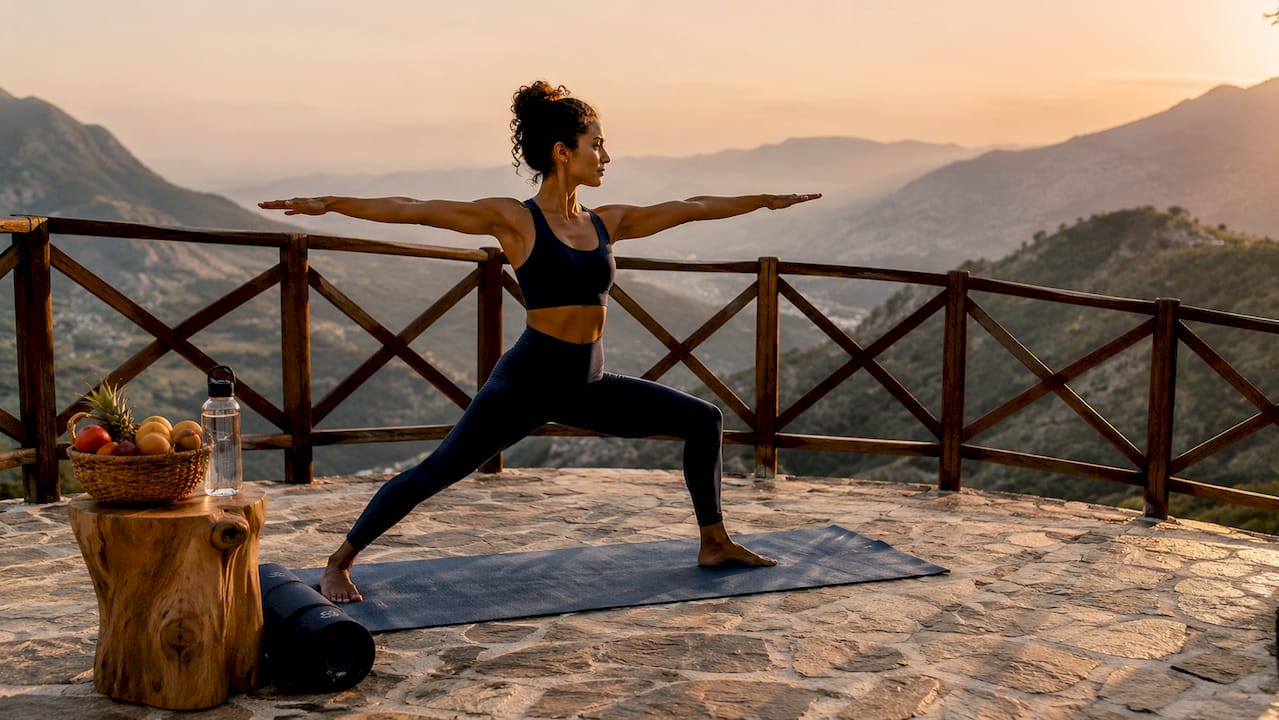
Secondary wellness tourists represent approximately 92% of all wellness tourism trips and account for 85% of total expenditures. That figure tells you something important: most wellness travel is not a dedicated retreat. It is a yoga class booked alongside a city break, a spa afternoon added to a beach holiday, or a morning meditation session at a mountain resort.
Common wellness tourism types include:
- Spa and thermal retreats — thermal baths, hydrotherapy, and massage programmes at dedicated resorts
- Mindfulness and meditation travel — structured programmes at centres such as Plum Village in France or Vipassana retreat networks across Asia and Europe
- Fitness-focused travel — boot camps, cycling tours, and hiking expeditions designed around physical conditioning
- Nature immersion — forest bathing, coastal walking, and altitude retreats that use environment as the therapeutic tool
- Traditional healing practices — Ayurveda in India, Traditional Chinese Medicine clinics, and hammam culture across the Middle East and North Africa
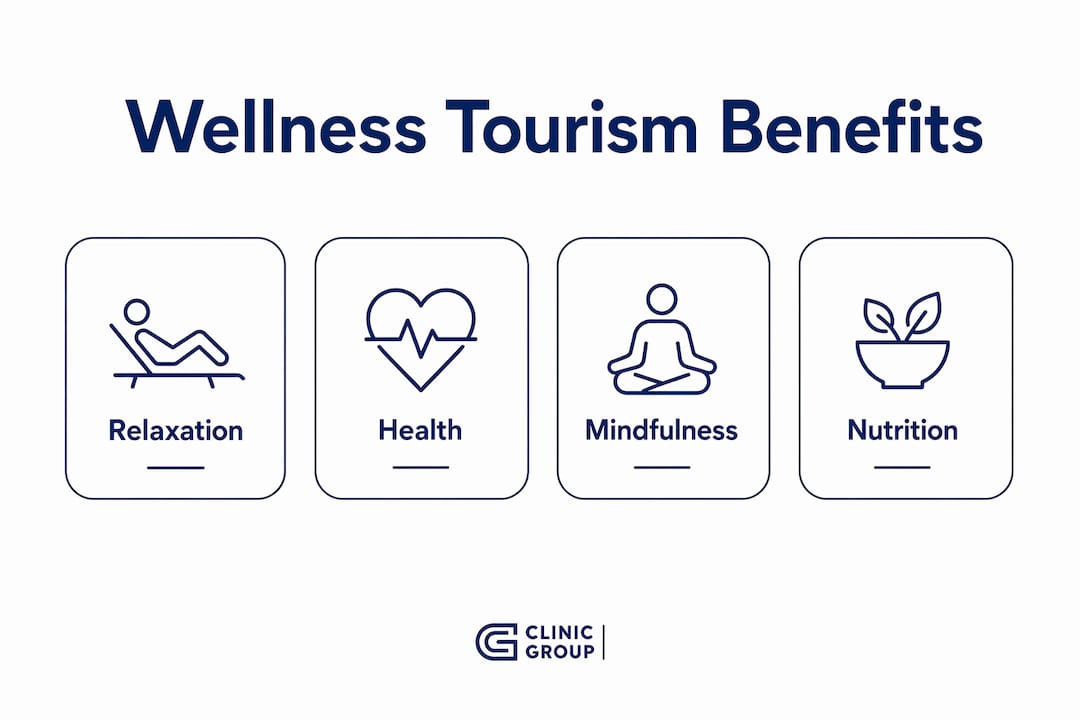
Wellness travellers seek yoga, meditation, nutritious food, and mindfulness tailored to personal needs. The breadth of that list reflects how varied the sector has become, and why no single destination or programme suits every traveller.
How does wellness tourism differ from medical tourism?
The distinction matters, and it is frequently misunderstood. Wellness tourism is proactive, focused on maintaining health and reducing stress before problems arise. Medical tourism is reactive, centred on clinical treatments such as surgery, dental procedures, or specialist consultations that address an existing condition.
| Feature | Wellness Tourism | Medical Tourism |
|---|---|---|
| Primary goal | Maintain and improve well-being | Treat or correct a health condition |
| Typical services | Spa, yoga, nutrition, mindfulness | Surgery, implants, diagnostics |
| Traveller mindset | Proactive, preventive | Reactive, curative |
| Facilities used | Resorts, retreat centres, nature venues | Accredited clinics, hospitals |
| Recovery required | Minimal | Often significant |
There is some overlap. Health assessments, genetic screening, and longevity check-ups sit at the intersection of both sectors. A traveller visiting a clinic in Dubai for a full-body health screen is engaging in something closer to medical tourism accreditation territory than a pure wellness retreat. The purpose and the infrastructure differ even when the destination is the same.
Pro Tip: If you are booking a programme that involves any clinical procedure, blood tests, or prescribed supplements, verify the provider holds recognised accreditation. Wellness branding does not guarantee clinical standards.
What are the key benefits of wellness travel?
The benefits of wellness tourism span mental, physical, and emotional health, and the strongest programmes deliver across all three. Stress reduction is the most commonly cited outcome, followed by improved sleep, better nutrition habits, and increased physical fitness.
Evidence-based wellness programmes are built on four core pillars: sleep regularity, daily movement, sensory reduction, and simple whole-food nutrition. These are not luxury additions. They are the mechanisms through which a structured retreat produces lasting change. A resort that offers only spa treatments without addressing sleep schedules or movement is selling relaxation, not wellness.
“A meaningful wellness retreat demands a structured daily rhythm involving scheduled movement, rest, and nutrition beyond just spa treatments to effect behavioural change.” — Wellness Tourism in 2026: The Definitive Guide
The risks of superficial wellness travel are real. Many travellers return from expensive spa holidays feeling temporarily refreshed but with no lasting change in habits. The difference between a commercial spa break and a genuine wellness programme lies in structure, intention, and what happens after you leave.
Key benefits of well-designed wellness travel include:
- Measurable reduction in cortisol and stress markers through consistent mindfulness practice
- Improved sleep quality through regulated schedules and reduced screen exposure
- Nutritional reset through whole-food meal plans, supported by resources such as evidence-based meal plans
- Increased baseline fitness through daily guided movement
- Habit formation that transfers to daily life at home
Pro Tip: Ask any retreat provider directly: “What is your exit plan for guests?” A credible programme will have a structured post-retreat protocol covering sleep, nutrition, and movement. If they cannot answer clearly, look elsewhere.
How to plan wellness travel that actually works
Planning effective wellness travel starts before you open a single booking website. Defining specific wellness goals before booking is the single most important factor in whether a trip delivers results. Stress management, physical fitness, mental clarity, and spiritual reconnection each require different environments, activities, and durations.
Follow these steps to plan a wellness trip with real outcomes:
- Define your primary goal. Choose one: stress recovery, fitness improvement, nutritional reset, or mindfulness development. A trip trying to address all four at once rarely succeeds at any.
- Match the destination to the goal. Mountain retreats suit digital detox and sleep recovery. Coastal resorts work well for movement and nutrition. Urban wellness centres are best for structured programmes with clinical oversight.
- Assess the daily structure. Request a sample daily schedule from any retreat. Look for a balance of movement, rest, nutrition, and reflection. Avoid programmes that fill every hour with activities.
- Set a realistic budget. DIY wellness retreats using nature-rich locations and self-scheduled classes can cost under $100 per day, compared to several hundred for all-inclusive luxury packages. The cost difference does not always reflect the quality of the wellness outcome.
- Verify provider credentials. For any programme involving clinical elements, confirm that the facility holds recognised accreditation and that practitioners are qualified. Clinicgroup’s guide to booking treatments abroad safely covers the key checks to make before committing.
- Plan your exit strategy. High-quality retreats provide a structured exit plan for maintaining routines after you return home. Many lower-quality programmes do not. Ask for this in writing before you book.
Pro Tip: Book a shorter trip first. A four-day retreat at a new provider tells you far more about their quality than any brochure. Scale up once you have experienced their daily rhythm firsthand.
Top wellness tourism destinations and experiences
Wellness tourism destinations span every continent, but certain regions have built strong reputations for specific types of experience. Choosing the right location is as important as choosing the right programme.
- Bali, Indonesia — long established as a centre for yoga retreats, meditation, and Ayurvedic treatments, with providers ranging from budget guesthouses to luxury resort programmes
- Tuscany, Italy — thermal spa towns such as Saturnia and Montecatini Terme combine natural mineral waters with nutrition-focused agriturismo stays
- The Swiss Alps — clinics and retreat centres in destinations such as Davos and Verbier offer medically supervised longevity and stress recovery programmes
- Albania — an emerging wellness hub with coastal resorts along the Riviera, thermal springs in Permet, and verified medical clinics in Tirana offering longevity check-ups and IV therapy at significantly lower costs than Western Europe
- Dubai, UAE — a growing destination for integrated wellness, combining luxury spa facilities with accredited clinics offering health assessments, anti-ageing therapies, and nutrition programmes
The distinction between retreat types matters when you are comparing options. Luxury all-inclusive resorts offer convenience and high service standards but often prioritise comfort over structured wellness outcomes. Boutique retreats with smaller groups typically deliver more personalised programmes. Self-guided nature retreats suit experienced wellness travellers who already have established routines and need space rather than instruction.
For travellers seeking verified clinical wellness services, destinations with European-standard accreditation such as those accessible through Clinicgroup offer a reliable middle ground between spa tourism and full medical travel. Understanding the full scope of health tourism options helps you position wellness travel within your broader healthcare planning.
Key takeaways
Wellness tourism delivers lasting benefits only when travellers set clear goals, choose structured programmes, and plan for life after the retreat.
| Point | Details |
|---|---|
| Definition is specific | Wellness tourism is proactive travel to maintain or improve well-being, not simply a relaxing holiday. |
| Most travellers are secondary | 92% of wellness trips include wellness as one element of a broader trip, not the sole purpose. |
| Structure drives results | Programmes built on sleep, movement, nutrition, and sensory reduction outperform spa-only offerings. |
| Exit plans are non-negotiable | A credible retreat provides a post-trip protocol; ask for it before booking. |
| Budget does not determine quality | DIY retreats under $100 per day can match or exceed luxury packages in wellness outcomes. |
Clinicgroup’s view on what wellness travel really requires
Wellness tourism has grown rapidly, and that growth has attracted providers whose offerings do not match their marketing. From our experience connecting patients with verified clinics across Europe and the Middle East, the most common mistake travellers make is confusing a pleasant environment with a genuine wellness programme.
A beautiful resort in Bali or a thermal spa in the Italian countryside can be deeply restorative. But restoration and lasting behavioural change are different outcomes. Travellers who return with genuinely improved sleep, reduced stress, and better nutrition habits almost always attended programmes with a structured daily rhythm and a clear exit plan. Those who return feeling temporarily refreshed but unchanged typically attended programmes built around comfort rather than intention.
The holistic wellness approach that produces real results is not complicated. It requires sleep regularity, daily movement, reduced sensory overload, and whole-food nutrition. What makes it difficult is consistency, and that is exactly what a well-designed retreat provides: a controlled environment where those habits become automatic before you return to ordinary life.
Our recommendation is straightforward. Define your goal first. Then find a provider whose daily schedule, practitioner credentials, and post-retreat support match that goal. Do not let the quality of the photography on a booking website substitute for those checks.
— Clinicgroup
Plan your wellness journey with Clinicgroup
Clinicgroup connects travellers with verified clinics and board-certified specialists in Albania and Dubai, covering a full range of wellness and medical services. For wellness-focused travellers, this includes IV therapy, longevity check-ups, anti-ageing treatments, and comprehensive health assessments, all delivered to European standards of care with transparent pricing.
Every Clinicgroup patient journey includes clinic matching, travel logistics support, partner hotel arrangements, and structured aftercare. You are not simply booking a treatment. You are accessing a coordinated experience designed to make international wellness travel safe, reliable, and straightforward.
Explore the full range of wellness and health treatments available through Clinicgroup, or browse the verified clinic directory to find accredited providers in your destination of choice. A free consultation is available to help you match your wellness goals to the right programme and location.
FAQ
What is the definition of wellness tourism?
Wellness tourism is travel undertaken with the primary or secondary purpose of maintaining or improving physical, mental, or spiritual well-being through purposeful activities. It is proactive by nature, distinguishing it from medical tourism, which addresses existing health conditions.
What is a wellness retreat?
A wellness retreat is a structured programme, typically residential, that combines scheduled movement, rest, nutrition, and mindfulness practices to support well-being. The most effective retreats also provide an exit plan to help participants maintain their routines after returning home.
How do i plan wellness travel effectively?
Define a single primary wellness goal before booking, then match your destination, daily schedule, and provider credentials to that goal. Ask any retreat for a sample daily programme and a post-retreat support plan before committing.
What are the most popular wellness tourism destinations?
Bali, Tuscany, the Swiss Alps, Albania, and Dubai are among the most established wellness tourism destinations in 2026, each offering distinct combinations of natural environment, cultural practices, and clinical or retreat-based programmes.
Is wellness tourism the same as medical tourism?
No. Wellness tourism is proactive, focused on stress reduction, fitness, and health maintenance. Medical tourism is reactive, involving clinical treatments such as surgery or specialist consultations. Some services, such as longevity check-ups, sit at the boundary of both sectors.