TL;DR:
- A wellness programme guide offers an evidence-based, holistic approach to improving mental, physical, emotional, and energy health simultaneously. Success relies on phased habit-building, regular tracking, and environment support, with long-term results typically spanning 8 to 12 weeks. Professional clinical support enhances progress by providing accountability and addressing interconnected health challenges effectively.
A wellness programme guide is a structured framework for improving mental, physical, emotional, and energy health simultaneously through evidence-based, whole-person practices. Unlike single-focus fitness plans or diet regimens, a well-designed wellness programme addresses the interconnected nature of health, where progress in one area accelerates gains in others. This guide draws on WHO guidelines, Harvard Medical School insights, and current research to walk you through every stage of building a sustainable wellness plan. Whether you are starting from scratch or refining an existing routine, the steps here are practical, personalised, and grounded in what the evidence actually supports.
What are the essential pillars of a holistic wellness programme?
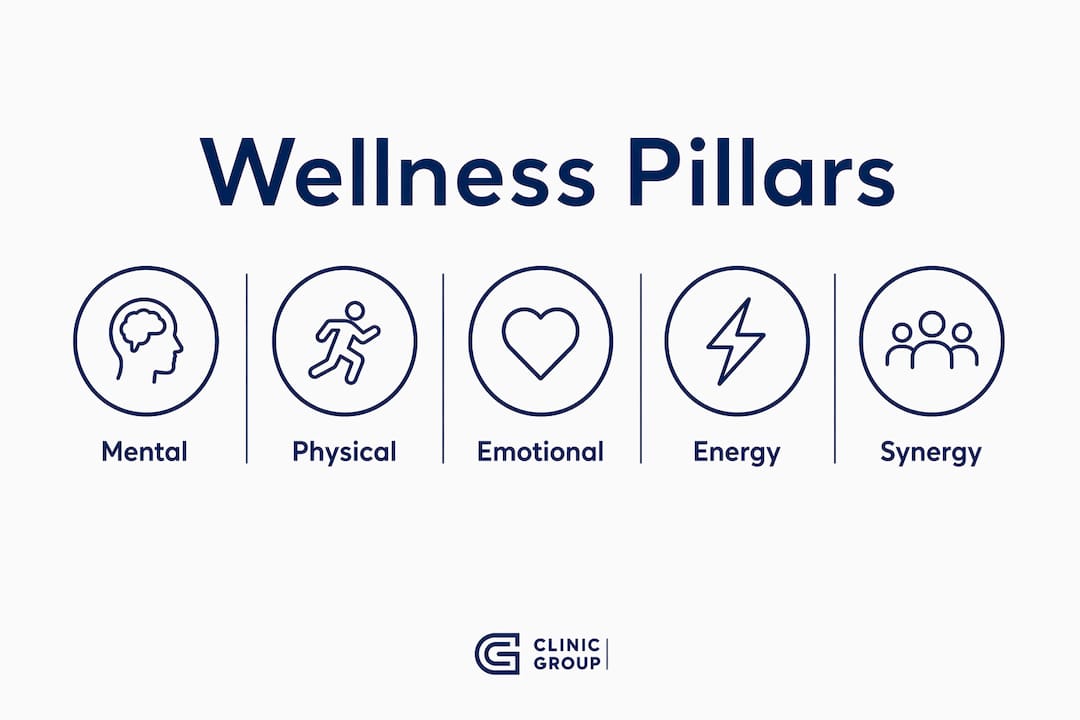
Holistic wellness integrates mental, physical, emotional, and energy health into a single, whole-person framework. These four pillars are not independent categories. They share biological pathways, meaning that neglecting one forces the others to compensate, gradually weakening your overall resilience.

Mental wellness covers stress regulation, cognitive flexibility, and the ability to recover from setbacks. Practices such as mindfulness meditation, structured breathing exercises, and cognitive reframing all target this pillar directly. Physical health is the most measurable pillar. The WHO 2020 physical activity guidelines recommend 150 to 300 minutes of moderate aerobic activity or 75 to 150 minutes of vigorous aerobic activity per week, plus muscle-strengthening on at least two days. Meeting these targets reduces chronic disease risk and supports mood regulation through endorphin and serotonin pathways.
Emotional balance includes self-awareness, healthy relationships, and the capacity to process difficult feelings without suppression. Social connection is a key lever here. Research consistently links strong social ties to lower cortisol levels and better immune function. Energy alignment refers to sleep quality, circadian rhythm consistency, and hydration. Poor sleep is one of the most common but underestimated barriers to progress across all other pillars.
The synergy between pillars is where the real gains appear. Fitness paired with mindfulness and nutrition creates biological synergy through shared pathways, improving gut microbiome diversity, cortisol regulation, and neurotransmitter balance simultaneously. This is why a wellness programme that targets multiple pillars outperforms any single-focus approach.
| Pillar | Focus areas | Example activities |
|---|---|---|
| Mental wellness | Stress regulation, cognitive flexibility | Mindfulness, breathing exercises, journalling |
| Physical health | Aerobic fitness, strength, mobility | Walking, resistance training, yoga |
| Emotional balance | Self-awareness, social connection | Therapy, community groups, gratitude practice |
| Energy alignment | Sleep quality, hydration, recovery | Sleep hygiene routines, hydration tracking |
Pro Tip: If you are unsure where to begin, rate each pillar on a 0 to 10 scale. The pillar with the lowest score is your highest-priority starting point.
How do you prepare to build a personalised wellness plan?
Preparation determines whether a wellness plan lasts weeks or years. Starting with a thorough self-assessment and SMART goal-setting is the most reliable foundation for sustainable habit development. SMART goals are Specific, Measurable, Achievable, Relevant, and Time-bound. “I will walk for 30 minutes five days per week for the next four weeks” is a SMART goal. “I want to be healthier” is not.
Before setting goals, assess your current status across all four pillars. Honest self-assessment surfaces the gaps that matter most and prevents you from investing effort in areas that are already functioning well. Consider the following steps:
- Rate each wellness pillar from 0 to 10 based on your current experience. Zero represents complete dysfunction; ten represents optimal function.
- Identify your top two stressors in each area. These are the friction points most likely to derail progress.
- Audit your environment. Does your home support good sleep? Does your workplace allow movement breaks? Holistic wellness requires addressing environmental and social levers, not just individual behaviours.
- Map your social support. Who in your life will encourage your goals? Who might inadvertently undermine them?
- Choose your tracking method. Options include a simple notebook, a spreadsheet, or a wearable device. The best tool is the one you will actually use consistently.
Quality assurance matters in wellness coaching too. When selecting a programme or practitioner, look for evidence-based credentials and transparent methodologies. Clinicgroup’s approach to quality assurance in clinics offers a useful benchmark for what rigorous health standards look like in practice.
Pro Tip: Write your SMART goals by hand and place them somewhere visible. Physical visibility increases follow-through compared to goals stored only in a phone app.
What step-by-step approach should you follow to design your programme?
The most common reason wellness programmes fail is attempting to change everything at once. Starting with one or two elements for approximately 30 days, then gradually adding others, significantly improves adherence and reduces drop-off. Think of it as layering habits rather than overhauling your life in a single week.
Here is a phased, practical roadmap:
-
Week 1 to 2: Establish your anchor habits. Choose one physical and one mental wellness practice. For physical health, a daily 20 to 30 minute walk meets the lower threshold of WHO activity guidelines and is sustainable for most starting points. For mental wellness, five minutes of structured breathing each morning is a low-barrier entry point.
-
Week 3 to 4: Add nutrition and hydration. Introduce one dietary change, such as replacing a processed snack with whole food, and set a daily water intake target. These changes do not require a complete diet overhaul. Small, consistent shifts compound over time.
-
Week 5 to 6: Integrate sleep hygiene. Set a consistent wake time seven days per week. This single habit stabilises your circadian rhythm faster than any other sleep intervention. Add a phone-free 30-minute wind-down period before bed.
-
Week 7 to 8: Introduce emotional and social wellness practices. Begin a gratitude journal with three entries per day. Schedule one social activity per week, whether that is a phone call, a walk with a friend, or a group class.
-
Week 9 onwards: Scale physical activity. Gradually increase aerobic activity toward the WHO target of 150 to 300 minutes of moderate exercise per week. Add resistance training on two days. By this stage, your foundational habits are stable enough to support greater physical demands.
-
Monthly: Review and recalibrate. Re-rate each wellness pillar on your 0 to 10 scale. Adjust goals based on what is working and what is creating friction.
Pro Tip: Consistency matters far more than intensity in the early stages. A 20-minute walk every day outperforms a two-hour gym session once a week for both physical adaptation and habit formation.
How can you track progress and adapt your wellness programme?
Tracking is what separates a wellness intention from a wellness programme. Structured self-reported wellbeing check-ins on a 0 to 10 scale, as highlighted by Harvard Medical School, allow you to catch emerging issues early and make timely adjustments before small setbacks become full reversals.
The most practical tracking approach combines subjective and objective data. Subjective data includes your daily mood rating, perceived energy level, and stress score. Objective data includes sleep duration, step count, and resting heart rate if you use a wearable device such as a Fitbit, Garmin, or Apple Watch. Neither source alone tells the full story. A week of high step counts paired with declining mood scores signals overtraining or unaddressed stress, not progress.
Meaningful wellness changes in stress physiology typically take 8 to 12 weeks of consistent practice. This is not a slow timeline. It reflects the biological reality of how cortisol regulation, sleep architecture, and gut microbiome composition adapt. Setting expectations around this timeframe prevents the discouragement that causes most people to abandon their programme around week four or five.
| Tracking tool | Review interval | What to adjust |
|---|---|---|
| 0 to 10 wellbeing rating | Daily | Identify patterns in mood and energy dips |
| Wearable sleep data | Weekly | Modify sleep hygiene habits if quality drops |
| Pillar self-assessment | Monthly | Reallocate effort to underperforming pillars |
| SMART goal review | Every 4 weeks | Update targets to reflect current capacity |
Pro Tip: Review your tracking data on the same day each week, such as Sunday evening. Consistency in review timing makes patterns easier to spot and decisions easier to act on.
What mistakes should you avoid for lasting wellness success?
The most damaging mistake in wellness programme design is attempting a complete lifestyle overhaul simultaneously. Motivation is highest at the start, which creates a false sense of capacity. Within two to three weeks, the cognitive load of managing multiple new habits simultaneously depletes willpower and leads to abandonment.
Avoid these common pitfalls:
- Relying solely on willpower. Willpower is a finite resource. Design your environment to make healthy choices the default. Keep water visible, prepare meals in advance, and remove friction from your movement routine.
- Ignoring social and environmental factors. Employee wellness depends on culture, workflow efficiency, and individual resilience. The same principle applies to personal wellness. A supportive environment multiplies individual effort.
- Chasing quick results. Fast biological resets are a misconception. Consistent long-term practice is required for measurable physiological change. Programmes promising transformation in seven days are not grounded in evidence.
- Neglecting sleep as a foundation. Sleep is not a passive recovery tool. It is the biological process through which stress hormones reset, memories consolidate, and tissue repairs. Treating it as optional undermines every other pillar.
“The goal of a wellness programme is not perfection. It is a reliable return to your baseline after disruption.”
Embedding wellness into daily rhythms and, where relevant, workplace culture enhances engagement and long-term success far more than standalone programmes. McKinsey’s 2026 research confirms that leadership support and job autonomy are significant multipliers for wellness outcomes in professional settings.
Key takeaways
A sustainable wellness programme requires integrating mental, physical, emotional, and energy health through phased habit-building, consistent tracking, and environment design rather than willpower alone.
| Point | Details |
|---|---|
| Start with two pillars | Focus on one physical and one mental habit for the first 30 days before adding others. |
| Use SMART goals | Specific, measurable targets outperform vague intentions for long-term adherence. |
| Track subjectively and objectively | Combine daily wellbeing ratings with wearable data for a complete picture of progress. |
| Allow 8 to 12 weeks | Meaningful physiological changes in stress and sleep take consistent practice over this period. |
| Design your environment | Remove friction from healthy choices rather than relying on motivation to sustain behaviour. |
What Clinicgroup has observed about wellness programmes that actually work
From working with patients across the UK, Italy, and Europe who have pursued wellness treatments abroad, one pattern stands out clearly. The individuals who achieve lasting results are not the ones who arrive with the most ambitious plans. They are the ones who arrive with the most honest self-assessments.
The clinical conversations we facilitate at Clinicgroup repeatedly confirm that people underestimate how interconnected their health challenges are. A patient seeking IV therapy for fatigue often discovers that their sleep architecture is the primary issue. Someone pursuing a health check-up for stress-related symptoms frequently finds that their social environment is the missing variable. This is why the holistic framework described in this guide is not theoretical. It reflects what we observe in practice.
The other consistent finding is that professional support accelerates progress in ways that self-directed programmes rarely match. Not because individuals lack capability, but because an external perspective identifies blind spots that are invisible from the inside. Whether that support comes from a wellness coach, a verified clinic, or a structured programme, the accountability and expertise it provides are genuinely significant.
Start small. Build incrementally. Seek qualified support when the complexity of your health picture exceeds what self-management can address. These are not cautious suggestions. They are the most reliable predictors of lasting change that we have observed across thousands of patient journeys.
— Clinic
Explore wellness treatments through Clinicgroup
Clinicgroup connects you with verified clinics in Albania and Dubai offering a range of evidence-based wellness treatments including IV therapy, comprehensive health check-ups, and longevity programmes. Every clinic in the Clinicgroup network is vetted for quality standards, and your treatment journey includes clinic matching, travel logistics, partner hotel arrangements, and structured aftercare. For patients in the UK and across Europe, this means access to high-quality wellness care at significantly lower cost than equivalent services at home. If you are ready to take your wellness programme beyond self-management and into professional clinical support, schedule a consultation to explore your options with a verified specialist.
FAQ
What is a wellness programme guide?
A wellness programme guide is a structured, evidence-based framework for improving mental, physical, emotional, and energy health through integrated lifestyle practices. It provides a step-by-step approach to goal-setting, habit formation, and progress tracking.
How long does it take to see results from a wellness programme?
Meaningful changes in stress physiology and sleep quality typically take 8 to 12 weeks of consistent practice. Expecting significant results within the first two weeks leads to premature abandonment of otherwise effective programmes.
What are the most important pillars of a holistic wellness plan?
The four core pillars are mental wellness, physical health, emotional balance, and energy alignment. Neglecting any one pillar forces the others to compensate, reducing overall resilience over time.
How do you track progress in a wellness programme effectively?
Combine daily 0 to 10 wellbeing ratings with objective data from wearables such as sleep duration and heart rate. Review your data weekly and reassess your SMART goals every four weeks to stay aligned with your current capacity.
Can professional wellness treatments support a personal wellness programme?
Yes. Clinical interventions such as IV therapy, health check-ups, and longevity assessments available through platforms like Clinicgroup can complement self-directed wellness efforts, particularly where nutritional deficiencies or chronic stress require targeted support.