TL;DR:
- Technology enhances dental accuracy, efficiency, and patient access through tools like AI, digital workflows, and teledentistry. Successful integration depends on organizational culture, staff training, interoperability, and purposeful workflow design. These technological advances support better patient outcomes and operational performance when thoughtfully adopted and managed.
Technology is reshaping dental practice far beyond the introduction of new equipment. For clinic owners and dental professionals, understanding the full role of technology in dental clinics means looking at how digital tools affect clinical accuracy, administrative efficiency, patient engagement, and care continuity. This article examines the areas where technology delivers the most measurable impact: AI-assisted diagnostics, digital workflow automation, teledentistry, and the organisational frameworks that determine whether any of it actually works. If you are evaluating where to invest next, this is where to start.
Table of Contents
- Key takeaways
- Digital tools redefining clinical diagnostics
- AI and digital workflows in clinic administration
- Teledentistry and digital interoperability
- Integrating new technologies into clinic workflows
- My perspective on technology and dental practice
- How Clinicgroup supports your clinic’s patient journey
- FAQ
Key takeaways
| Point | Details |
|---|---|
| Diagnostics are more precise | Intraoral scanners and CBCT imaging improve accuracy but require careful workflow integration to deliver consistent results. |
| AI transforms administration | Smart scheduling, billing automation, and triage tools improve chair utilisation and reduce no-show rates. |
| Teledentistry extends reach | Remote consultations offer comparable outcomes to in-person care and significantly lower costs for patients. |
| Culture determines success | Technology adoption succeeds or fails based on staff training, leadership, and change management, not hardware alone. |
| Interoperability is non-negotiable | Standardised data formats like FHIR and DICOM allow secure, scalable data exchange across devices, labs, and providers. |
Digital tools redefining clinical diagnostics
The role of technology in dental clinics is perhaps most visible at the point of diagnosis. Intraoral scanners, cone beam computed tomography (CBCT), and AI-powered clinical decision support systems have collectively raised the bar for what precision in dentistry looks like.
Intraoral scanners remove the need for traditional impressions, reducing patient discomfort and the risk of distortion. However, not all scanners perform equally. Scan speed and accuracy vary considerably across devices. In one clinical evaluation, the Primescan 1 recorded the fastest scan time, whilst the Medit i700 demonstrated the highest scan trueness. For a clinic choosing a scanner, these distinctions matter. Speed affects workflow throughput; trueness affects the accuracy of restorations and the rework rate at the lab.
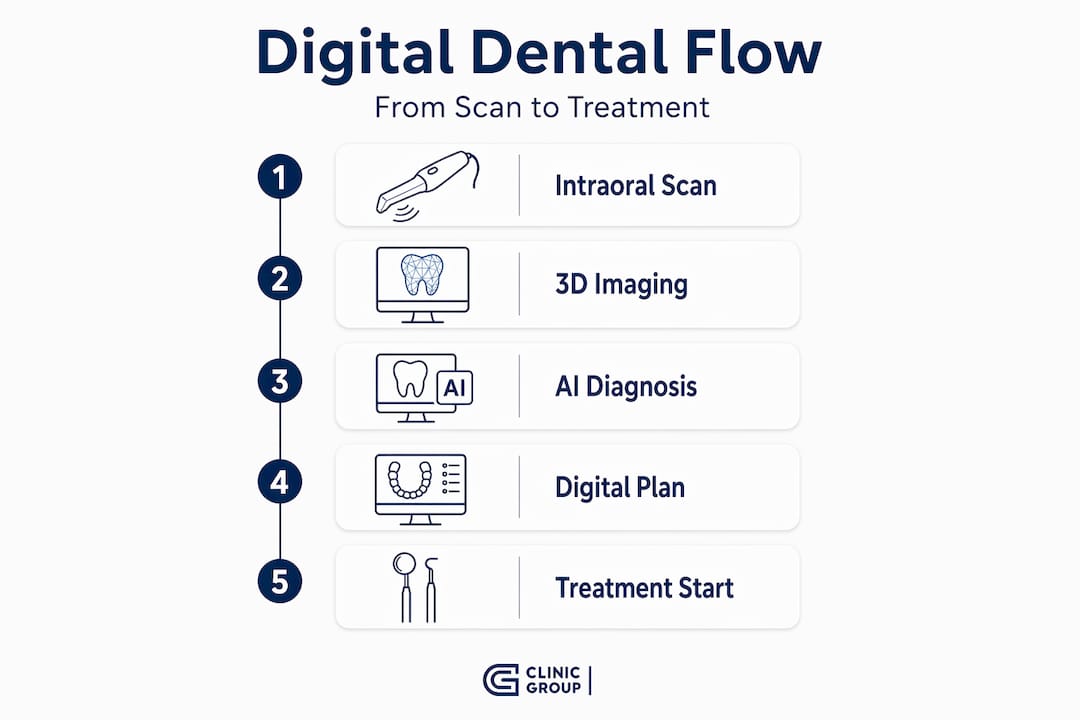
CBCT imaging offers three-dimensional views that two-dimensional X-rays simply cannot match, making it particularly valuable for implant planning, endodontic assessment, and orthodontic cases. That said, CBCT should follow the ALARA principle (as low as reasonably achievable), with formal quality assurance inspections and justified clinical decision frameworks in place. Annual QA/QC reviews and tracking of cumulative patient exposure are considered best practice by leading imaging guidelines. This is not optional compliance; it is a patient safety obligation.
AI-based clinical decision support systems add another layer of diagnostic capability. These tools assist with risk stratification, lesion detection, and treatment planning, often flagging findings that clinicians might otherwise catch at a later stage. AI-based decision support improves diagnostic accuracy and patient outcomes, but only when the underlying data is high quality, the system is interpretable, and governance frameworks are in place. A system that clinicians do not trust or understand will not be used, regardless of its technical capability.
Comparison of leading intraoral scanners
| Scanner | Scan speed | Scan trueness | Key consideration |
|---|---|---|---|
| Primescan 1 | Fastest | Moderate | Best for high-volume, fast turnaround workflows |
| Medit i700 | Moderate | Highest | Best for precision-critical restorations |
| Additional devices | Variable | Variable | Evaluate against lab and software compatibility |
Pro Tip: Before committing to an intraoral scanner, map your full workflow from scan to lab delivery. File format compatibility, lab software requirements, and IT handoff protocols often matter more than raw hardware performance.
AI and digital workflows in clinic administration
The administrative side of dentistry is where technology in dentistry can generate some of its most measurable returns, and where it is most often underinvested. AI-enhanced digitisation supports smart scheduling, triage, billing automation, and inventory management, directly influencing key performance indicators such as chair utilisation rates and patient no-show rates.
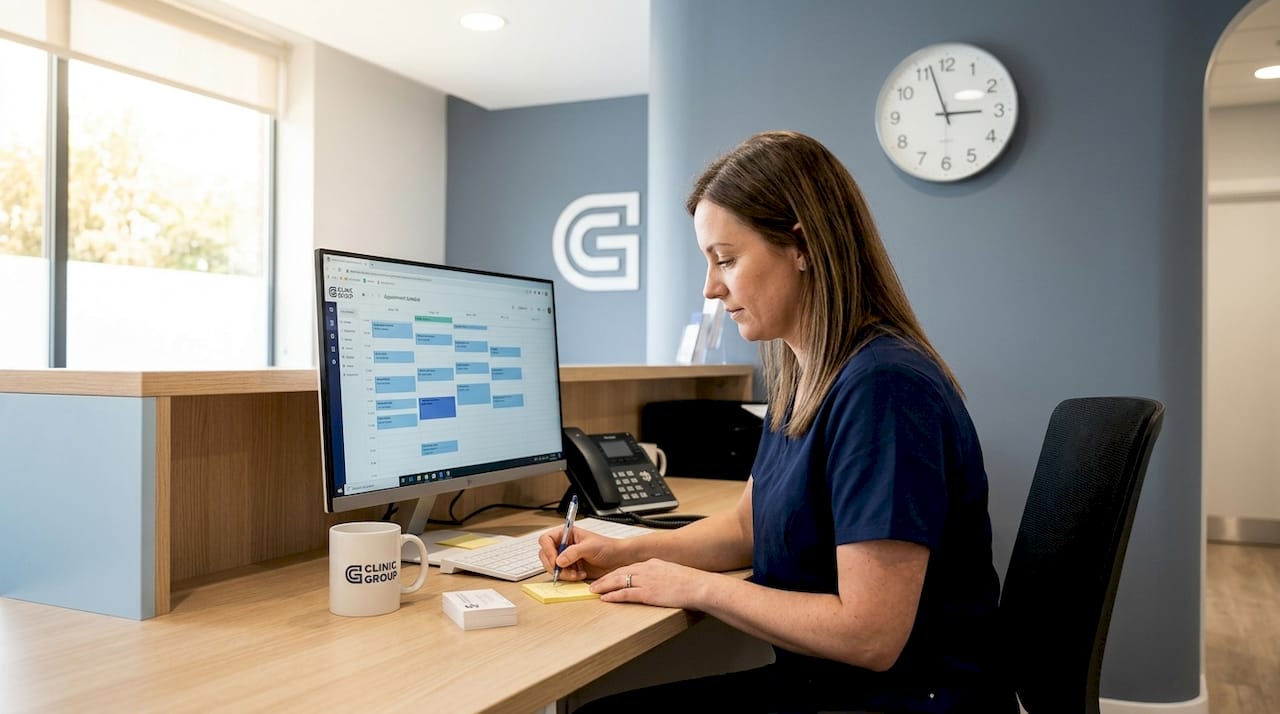
Consider what smart scheduling actually means in practice. Rather than relying on static appointment templates, AI scheduling tools analyse historical attendance patterns, treatment durations, and patient preferences to propose appointment slots that maximise chair time and minimise gaps. Automated reminders, sent by text or email at optimised intervals, have shown consistent reductions in no-show rates across dental clinic innovations in the field.
Billing automation reduces the administrative burden on front-desk staff, accelerates revenue cycles, and decreases the rate of claims errors. Triage tools, particularly those integrated into patient-facing portals, can categorise urgent versus routine cases before the patient even arrives, allowing clinicians to prepare more effectively.
There are risks attached to all of this. Data protection obligations under UK GDPR and equivalent frameworks must be central to any implementation plan. Patient safety considerations around automated triage require human oversight protocols. And staff who have not been adequately trained or involved in the transition may resist or circumvent new systems, undermining the investment entirely.
Here are the conditions most likely to determine whether AI adoption in your clinic succeeds or stalls:
- Leadership commitment: Clinic owners and principal dentists must champion digital change, not just sign off on procurement.
- Phased implementation: Rolling out one system at a time allows teams to build confidence and identify issues before they compound.
- Staff engagement from the outset: Involve nurses, receptionists, and dental therapists in decisions about which tools to adopt.
- Clear KPIs: Define what success looks like before go-live: chair utilisation targets, billing accuracy rates, appointment adherence benchmarks.
- Ongoing training: Technology changes. Continuous learning should be built into the clinic calendar, not treated as a one-off event.
Pro Tip: Successful AI implementation depends more on organisational culture and change management than on rapid technology rollout. A phased approach with regular staff feedback loops consistently outperforms big-bang deployment strategies.
Teledentistry and digital interoperability
Teledentistry has moved well beyond video consultations. It now represents a meaningful component of how modern dental clinics extend access, manage follow-up care, and integrate with broader digital health ecosystems. Teledentistry improves access to care and lowers costs, with clinical outcomes that are comparable or better than in-person care in a range of scenarios, according to a narrative review covering studies from 2015 to 2025.
For international patients, teledentistry is particularly significant. Pre-treatment consultations, post-operative follow-ups, and remote monitoring can all be conducted without requiring additional travel, reducing both cost and inconvenience. For the clinic, it expands the catchment area and creates more touchpoints with patients across their care journey.
The next phase of this evolution is the Internet of Dental Things (IoDT), where wearable sensors, smart oral care devices, and AI-driven monitoring tools connect into an integrated digital oral health ecosystem. Interoperability standards like FHIR and DICOM are what make this ecosystem function. Without standardised data formats and secure exchange protocols, data from one device or platform cannot be reliably read by another, creating fragmentation that undermines clinical continuity.
For clinic owners thinking about how to build a scalable digital infrastructure, the following steps represent a practical sequence:
- Audit current data systems. Understand what formats your practice management software, imaging systems, and lab platforms use before adding new tools.
- Prioritise interoperable platforms. Choose software and devices that conform to open standards, even if proprietary alternatives appear feature-rich on the surface.
- Establish data governance protocols. Define who owns patient data, how it is stored, and who can access it, covering both clinical and administrative records.
- Build teledentistry into your care pathway. Rather than treating remote consultations as an add-on, position them as a structured part of initial assessment and post-treatment review.
- Engage with reimbursement frameworks. Understand how teledentistry services are funded or reimbursed in your practice context, particularly if serving international patients.
Ethical considerations around consent, data privacy, and patient safety during remote consultations must also be addressed as part of any teledentistry rollout. These are not afterthoughts.
Integrating new technologies into clinic workflows
Technology adoption in a dental clinic is a socio-technical change. That framing matters because it shifts the question from “which tool should we buy?” to “how do we change how we work?” The impact of tech on dental care is ultimately determined by how well the technology integrates with the people and processes already in place.
End-to-end workflow integration is often more critical for success than hardware specifications. Standardising lab requirements, file formats, and IT handoff procedures reduces rework, delays, and errors at every stage of the clinical and administrative chain. A premium intraoral scanner connected to an incompatible lab management system delivers far less value than a mid-range device that fits seamlessly into a well-structured workflow.
Consider these principles when planning any technology integration:
- Map the full workflow first. Trace each process from patient arrival through to payment and follow-up before identifying where a digital tool would improve it.
- Avoid fragmented systems. Multiple disconnected platforms create manual data re-entry, version control issues, and compliance risks. Consolidate where possible.
- Build QA/QC into imaging protocols. For CBCT and advanced imaging, formal quality assurance inspections should be scheduled annually, with justified use frameworks reviewed regularly.
- Create psychological safety for staff. Teams that feel safe to flag problems with new systems are more likely to surface issues early, before they affect patient care or operational performance.
- Treat governance as infrastructure. AI clinical infrastructure requires ethical frameworks, data quality standards, and continuous monitoring. These are not one-time tasks.
The clinics that get the most from modern dental technology are those that view each adoption as part of a longer strategic arc, not a standalone procurement decision.
My perspective on technology and dental practice
In my experience working with dental professionals and clinic owners across Europe and the Middle East, the biggest mistake I see is conflating technology with transformation. A clinic can invest in the latest CBCT scanner, an AI scheduling system, and a new patient management platform, and still see no meaningful improvement in patient outcomes or operational performance. Why? Because the systems were not integrated into the culture or the workflow.
What I have found is that the clinics making the most genuine progress are those where leadership treats digital adoption as an ongoing conversation with their team, not a directive from above. They pilot one change at a time, measure it honestly, and adjust before moving on. They invest in training at the same level they invest in hardware. And they keep the patient experience as the constant reference point throughout.
I am also clear-eyed about what technology cannot do. It cannot replace clinical judgement. It cannot compensate for poor stewardship of patient data. And it cannot shortcut the trust that a patient places in a clinic. The role of software in dentistry is to support better decisions and better care, not to replace the human factors that make both possible.
At Clinicgroup, we have built our network on these principles: verified specialists, transparent standards, and care that follows the patient through every stage of their journey. Technology is part of that. But it is always in service of the patient, never the other way around.
— Clinicgroup
How Clinicgroup supports your clinic’s patient journey
If the insights in this article have prompted you to think about how your clinic presents itself to international patients, Clinicgroup offers a practical route forward. Our platform connects patients from the UK, Italy, and across Europe with verified dental clinics in Albania and Dubai, where board-certified specialists practise to high European standards using advanced digital tools and established clinical protocols.
For patients seeking dental implants, crowns, veneers, or other treatments, Clinicgroup handles the full journey. That includes clinic matching, travel logistics, partner hotel arrangements, and aftercare coordination. Our dental treatment options cover a broad range of procedures, with transparent pricing and quality assurance built in from the start. Whether you are a clinic owner looking to attract international patients or a professional exploring what a technology-enabled care model looks like in practice, Clinicgroup is ready to support you. Get in touch to find out how we can help.
FAQ
What is the role of technology in dental clinics?
Technology in dental clinics improves clinical accuracy, administrative efficiency, and patient access. Key applications include intraoral scanners, CBCT imaging, AI-assisted diagnostics, and digital workflow tools that support scheduling, billing, and patient triage.
How does AI improve dental clinic administration?
AI adoption in dental clinics supports smart scheduling, automated billing, and triage, improving chair utilisation and reducing no-show rates. Successful implementation depends on staff training, phased rollout, and clear performance benchmarks.
Is teledentistry as effective as in-person dental care?
Research indicates that teledentistry outcomes are comparable or better than in-person care in many scenarios, with added benefits of lower costs and improved access, particularly for follow-up consultations and remote monitoring.
What makes a dental technology integration fail?
Most failures stem from poor workflow integration, incompatible systems, and insufficient staff training rather than technology limitations. Interoperability gaps between devices, labs, and practice management software are a common root cause.
What is CBCT and when should dental clinics use it?
CBCT (cone beam computed tomography) provides three-dimensional imaging for complex cases including implant planning, endodontics, and orthodontics. Its use should follow the ALARA principle with formal QA/QC protocols and clinically justified decision frameworks.